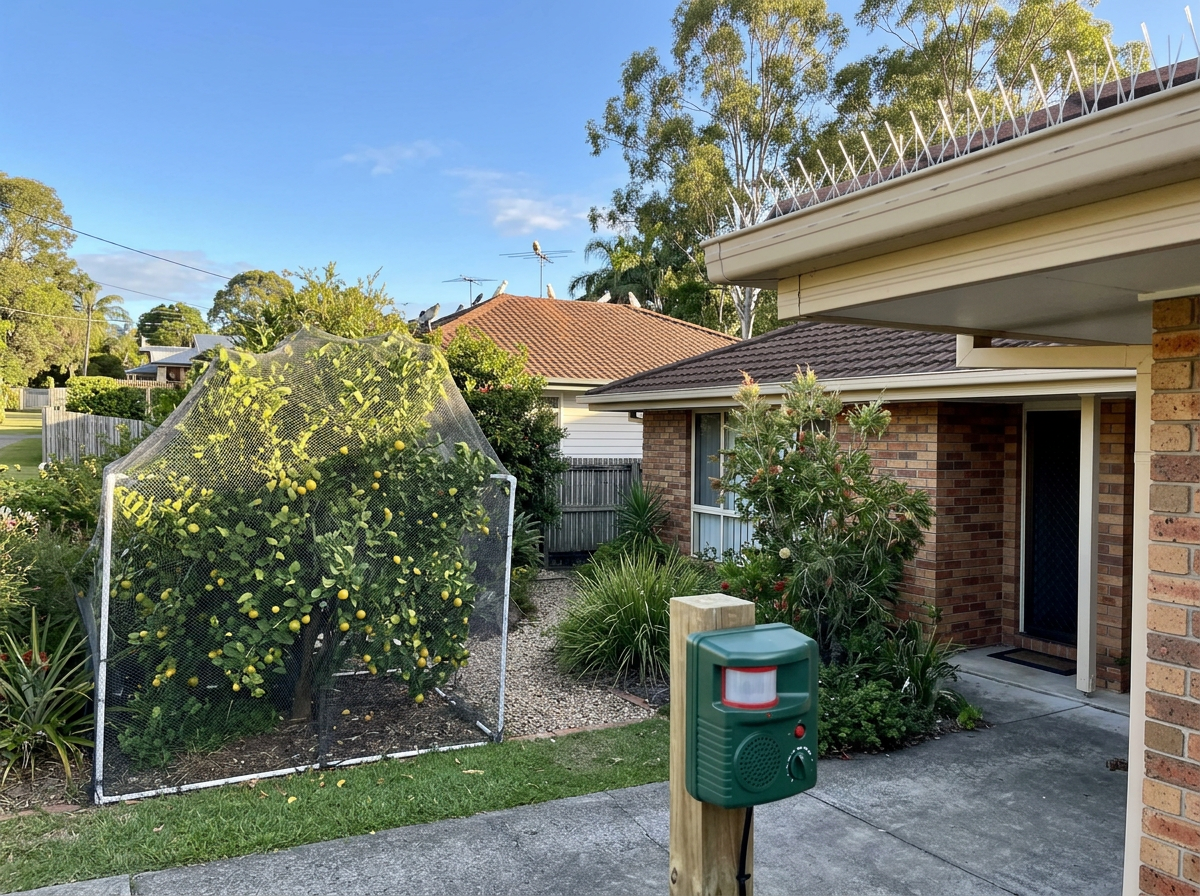
The best best owl bird deterrent for your situation depends on two things: where the problem is happening and what the birds are doing there. A pigeon roosting on your roof ledge needs a different solution than a sparrow trying to nest in your soffit, which needs a different solution than seagulls circling your pool deck. Get those two details right first, and picking the right deterrent becomes much easier. This guide walks you through every major category, tells you where each one actually works, and helps you build a plan that holds up over time. best bird deterrent australia. best bird nest deterrent
Best Bird Deterrents: Find the Right Device for Your Situation

Marcus Weatherby
23 Mar 2026
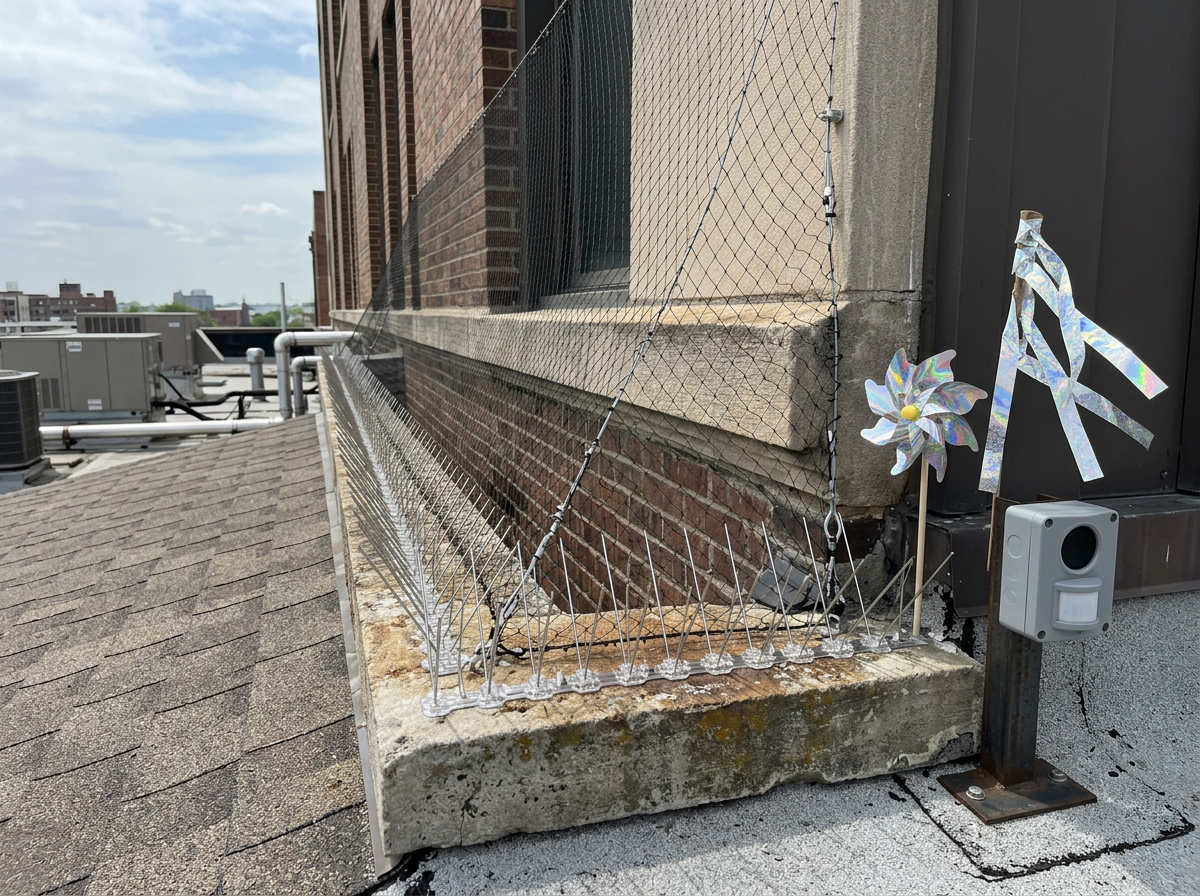
How to choose the best bird deterrent for your exact problem
Before you buy anything, nail down three things: the bird species (or at least the size), the behavior (landing, roosting, or nesting), and the specific location. These three factors determine which deterrent category will actually work and which ones you can skip.
Landing means birds briefly touch down on a surface, usually a ledge, railing, or rooftop, before moving on. Roosting means they are staying for hours, often returning to the same spot daily. Nesting means they are building or already have a nest, which is a much bigger problem because once eggs or chicks are present, it is illegal in most jurisdictions to disturb the nest. Penn State Extension is direct on this point: the best strategy is exclusion before nesting begins, not eviction after.
For most people, the decision tree looks like this. For most people, the decision tree looks like this. If birds are landing or roosting on a hard surface (ledge, rail, roof edge), start with physical deterrents like spikes or wire. If they are entering a space (attic, eave gap, barn opening), netting or exclusion materials are your first move. If the problem is open spaces like gardens, patios, or large rooftops, layer in sensory and visual deterrents. Chemical repellents fill in the gaps where physical barriers are not practical. If they are entering a space (attic, eave gap, barn opening), netting or exclusion materials are your first move. If the problem is open spaces like gardens, patios, or large rooftops, layer in sensory and visual deterrents. Chemical repellents fill in the gaps where physical barriers are not practical.
| Bird Behavior | Best Primary Method | Backup Method |
|---|---|---|
| Landing on ledges/rails | Bird spikes or wire | Visual deterrents |
| Roosting on rooftops/beams | Netting or spikes | Sonic deterrents |
| Nesting in eaves/gaps | Exclusion netting or foam | Seal entry points permanently |
| Foraging in gardens | Visual deterrents or netting | Chemical repellents on plants |
| Gathering on patios/pools | Sonic or visual deterrents | Physical barriers at perimeters |
| Perching on solar panels | Panel-edge spikes or mesh | Wire systems |
Best bird deterrent types: physical barriers (spikes, netting)
Physical barriers are the most reliable long-term deterrents because they do not rely on birds being startled or confused. They simply remove the usable surface. This is why exclusion is the primary strategy recommended by university extension services for both residential and agricultural settings.
Bird spikes
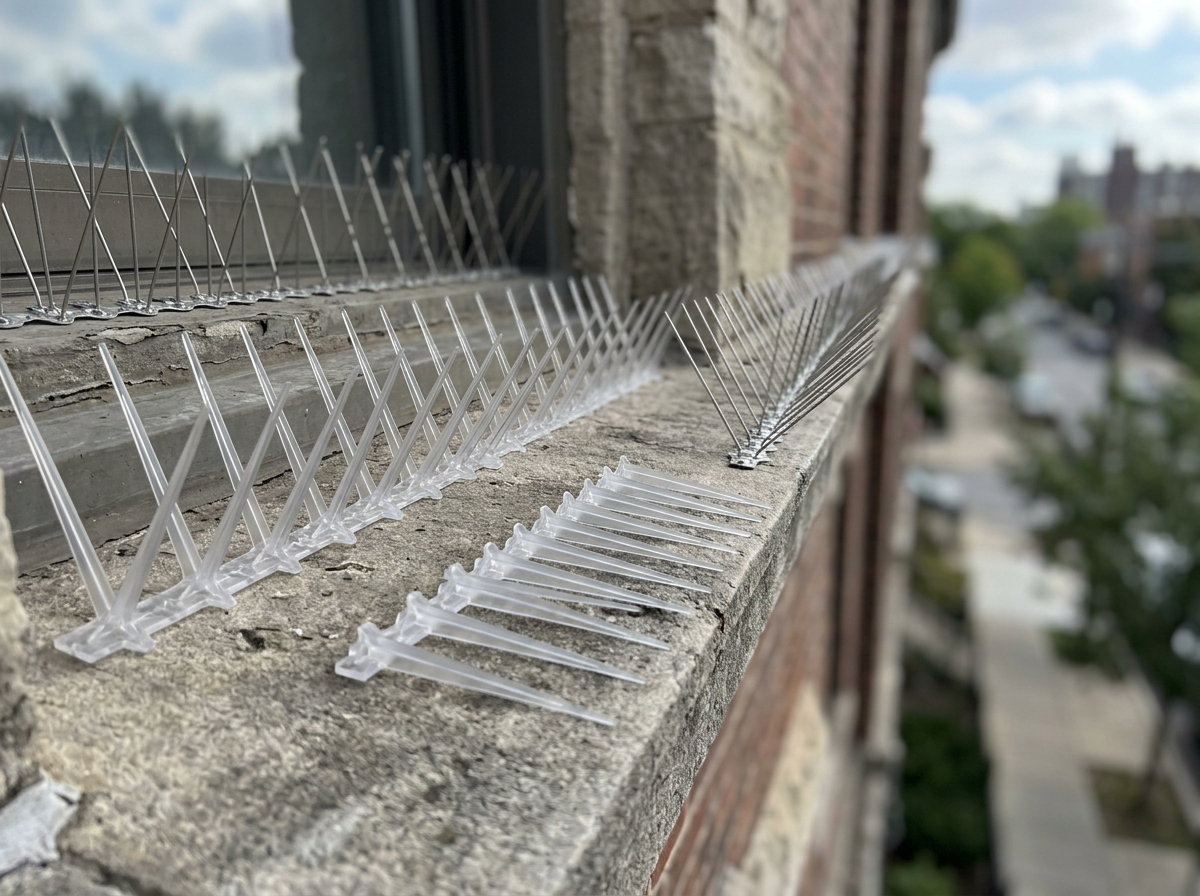
Spikes work best on narrow surfaces: ledges, window sills, roofline edges, fence tops, and signage. They come in polycarbonate plastic (lighter, more discreet, good for most situations) and stainless steel (more durable in harsh weather and better for larger birds like pigeons and gulls). The key is coverage. A gap of even a few inches gives birds enough room to squeeze in, so run spikes continuously with no breaks. For ledges wider than about 5 inches, use a double or triple row of spikes, or birds will simply stand behind them.
Bird netting
Netting is the right tool when you need to block access to an entire area rather than just a surface edge. It is used under solar panels to prevent nesting, across building facades to keep pigeons out of structural gaps, over garden beds to protect crops, and inside barns or warehouses to keep birds away from stored materials. Mesh size matters: 19mm (3/4 inch) netting blocks sparrows and starlings, while 50mm (2 inch) is sufficient for pigeons. Heavier knotted polyethylene netting lasts longer outdoors than the lighter woven types.
One thing people underestimate with netting is the installation. Loose netting that sags or has gaps at the edges is almost useless. Birds will find those gaps and get through, sometimes getting trapped inside, which creates a worse problem. Secure the perimeter first, pull the netting taut, and inspect every attachment point. For large installations like rooftop zones or commercial facades, professional installation is usually worth the cost.
Wire and post systems
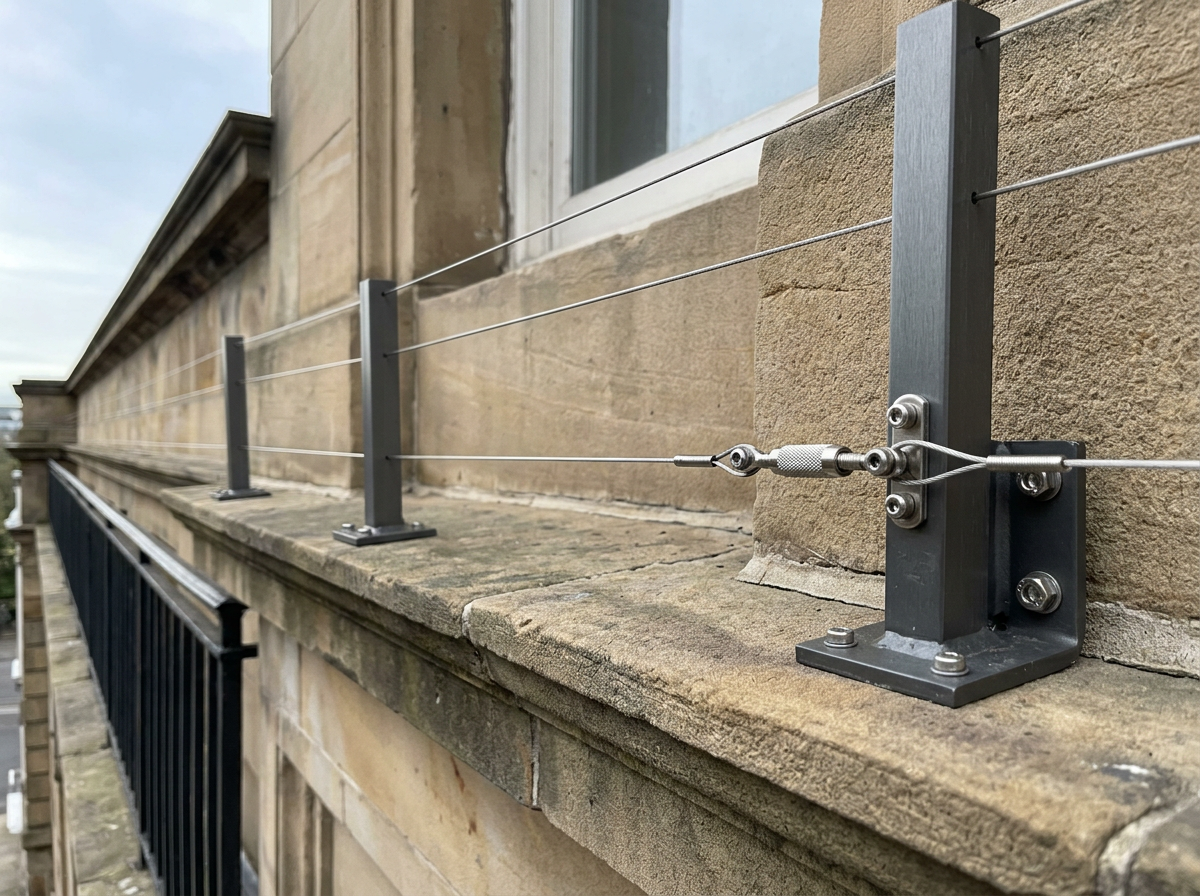
Tensioned wire systems (sometimes called bird wire or post-and-wire systems) are a lower-profile alternative to spikes, ideal for architectural surfaces where aesthetics matter. Thin stainless steel wire is strung between spring-loaded posts at varying heights, creating an unstable landing surface. Birds attempt to land, find no grip, and move on. These work well on ledges, parapets, and rooftop HVAC units. They require more precise installation than spikes but are nearly invisible from ground level.
Sensory deterrents (sonic/ultrasonic) and when they work
Sonic and ultrasonic deterrents work by disrupting a bird's sense of safety in an area. Sonic devices broadcast recorded predator calls, bird distress calls, or disruptive sounds at frequencies birds can hear. Ultrasonic devices emit sounds above the human hearing range. The distinction matters because most research shows that common pest birds (pigeons, sparrows, starlings, gulls) do not respond reliably to ultrasonic frequencies. Their hearing range overlaps with ours more than people realize. Sonic devices tend to perform better.
The main limitation with any sound-based deterrent is habituation. Birds are smart enough to figure out that a repeated sound is not an actual threat. A device playing the same hawk call every 10 minutes will be ignored within days to weeks. The devices that hold up best are programmable units that vary the sound, the timing, and the volume. Even then, sonic deterrents work better as part of a layered approach rather than as a standalone solution.
Where sonic deterrents do genuinely help is in open or semi-open areas where physical barriers are impractical: large patios, pool decks, agricultural fields, marina docks, and flat commercial rooftops. For smaller or enclosed spaces, the sound bounces in ways that can be disruptive for people and pets nearby. Always check the coverage area spec on any unit you buy, typically measured in square feet or acres, and do not assume one unit will cover a large property.
Visual deterrents that actually deter (and how to rotate them)
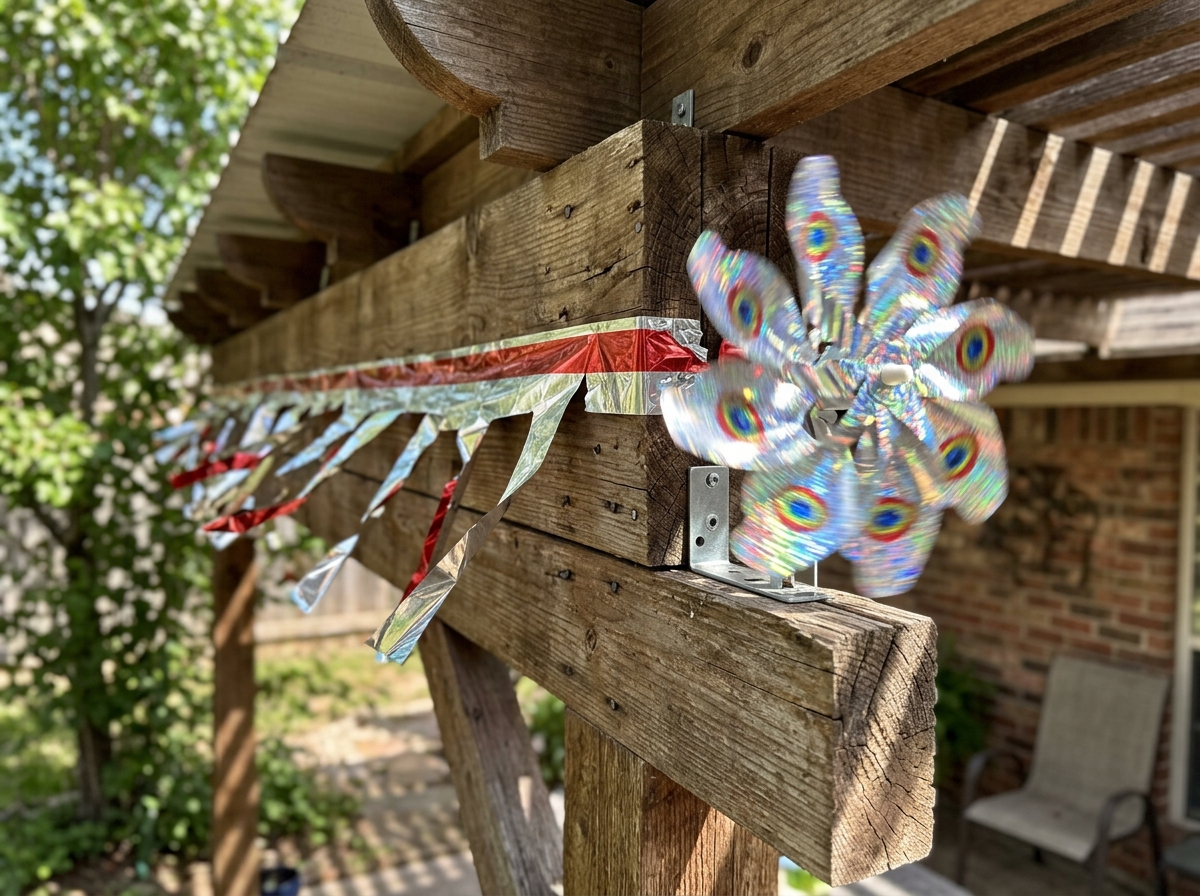
Visual deterrents range from reflective tape and holographic pinwheels to predator decoys like owls and hawks. They work on the same principle as sonic deterrents: birds perceive a threat and avoid the area. And they have the same core problem: habituation. A plastic owl sitting in the same spot for two weeks will eventually have pigeons perching on its head.
The solution is rotation and movement. Move decoys to a new position every few days. Use decoys that have moving parts, like a spinning head or flapping wings, rather than static ones. Reflective materials (like reflective tape, foil strips, or holographic bird-scare tape) are more consistently effective than static decoys because they create unpredictable flashes of light and movement in the wind. Hang them so they can move freely and replace them when they lose their reflectivity.
Predator kite systems, which suspend a hawk or falcon shape from a pole on a long tether so it swoops in the wind, are among the more effective visual deterrents for open areas like gardens, vineyards, and flat roofs. They outperform static decoys significantly, though they also need to be relocated periodically and stored during calm weather when they just hang motionless.
For windows specifically, external window films, UV-reflective decals, or closely spaced vertical strips (spaced no more than 2 inches apart) are the most reliable options. These address both the bird deterrence goal and the bird strike safety concern at the same time.
Chemical repellents: what to use, where, and safety limits
Chemical bird repellents fall into two main categories: tactile repellents and taste/scent-based repellents. Tactile repellents are sticky gel substances applied to landing surfaces. Birds land, feel the uncomfortable texture, and avoid the surface going forward. These work well on ledges, beams, and roof edges where spikes are not suitable. The downside is that they collect dust, feathers, and debris over time, losing effectiveness after 6 to 12 months outdoors, and they can trap small birds if applied too thickly, which is both a welfare concern and a legal one in many areas.
Taste and scent repellents, most commonly products based on methyl anthranilate (a grape-derived compound), are sprayed on surfaces, grass, or vegetation. Birds find the scent irritating and leave the treated area. These work reasonably well on lawns, golf courses, and garden beds where geese, starlings, or sparrows are foraging. They need reapplication after rain and are most effective when applied before birds establish a strong routine in the area.
Safety considerations are important here. Always read the product label and apply only to the surfaces listed. Avoid applying sticky gels near bird nesting areas, which could trap non-target wildlife. Methyl anthranilate products are generally considered low-hazard but keep them away from water sources where they can affect aquatic life. For commercial and agricultural applications, check local regulations, as some chemical repellents require applicator certification.
One place chemical repellents genuinely earn their keep is in spots where no other method is practical, like an ornamental ledge on a historic building facade where spikes would be visually unacceptable, or a gravel rooftop where netting cannot be anchored easily. Think of them as a complement to physical methods, not a replacement.
Installation tips, placement, and avoiding common failure points
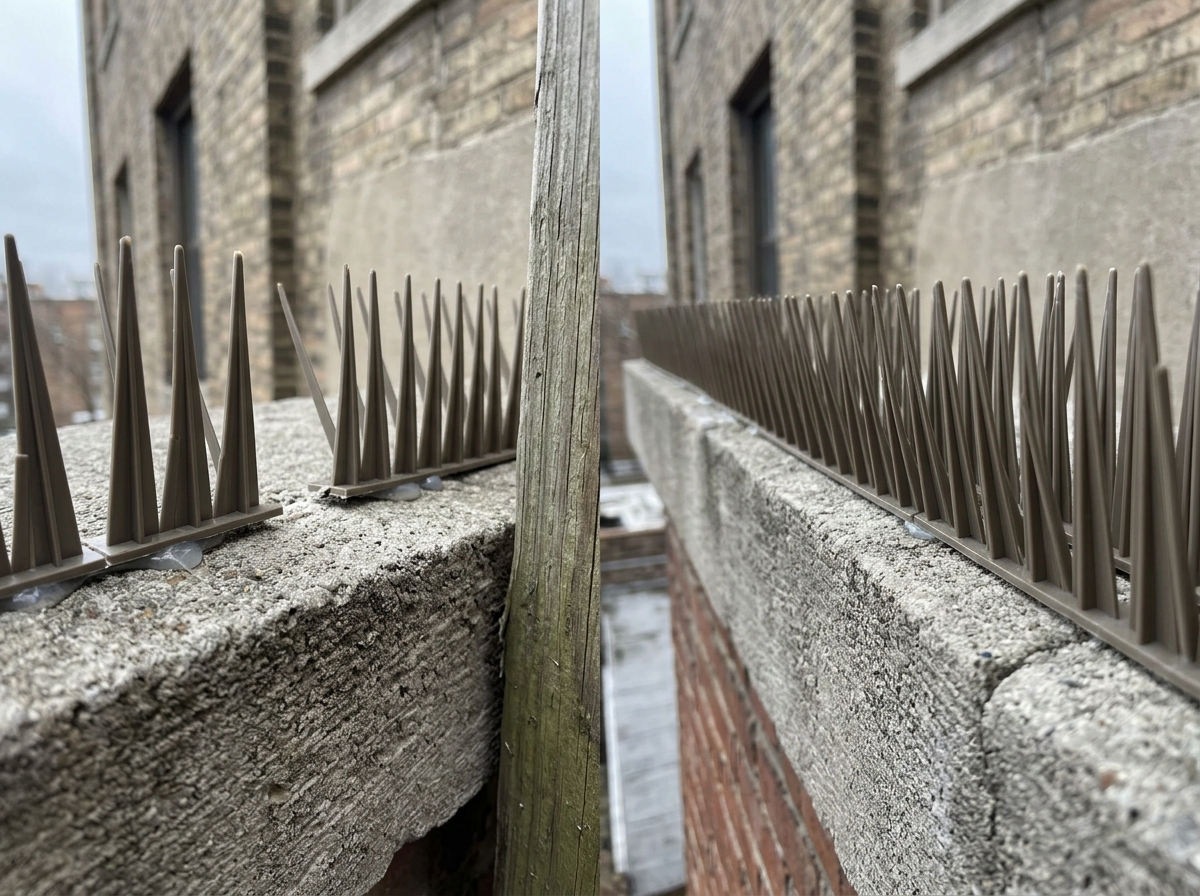
The most common reason bird deterrents stop working is incomplete coverage. Birds will exploit every gap. When installing spikes, run them edge to edge with no break. When installing netting, secure every anchor point and check the perimeter tension monthly. When placing a sonic unit, verify the claimed coverage radius is realistic for your specific layout, walls and structures break up sound propagation significantly.
Surface preparation matters more than most guides mention. Spikes and gels need to adhere to clean, dry surfaces to last. If you are installing on a ledge that has bird droppings on it, clean it first. Bird droppings are corrosive and will degrade adhesive faster, and residual feces can also attract birds back to a familiar spot even after deterrents are in place.
Height and angle are factors too. Spikes installed on a surface with a slight inward angle are more effective than spikes on a perfectly flat ledge, because birds approaching from outside have a harder time finding purchase. For netting on eaves or solar panels, ensure the netting is pulled tight enough that birds cannot push through or get underneath at the edges.
Timing your installation relative to the bird calendar also makes a real difference. Iowa State University Extension notes that house sparrows, one of the most common residential pests, begin nesting from mid-spring through late summer. If you install exclusion barriers before that window, you prevent the problem entirely. If you wait until nesting is underway, you are legally constrained from removing active nests with eggs or young, so you will be dealing with the problem for the entire season.
- Clean surfaces before installation to improve adhesion and reduce bird attraction
- Cover every potential landing or entry point with no gaps larger than necessary for your target bird size
- Check and re-tension netting every 4 to 6 weeks, especially after storms
- Rotate or reposition visual and sonic deterrents every 5 to 10 days to prevent habituation
- Install before nesting season begins (early spring is ideal for most regions)
- Do not mix incompatible methods in the same zone, for example, sticky gel near bird netting can trap birds
Quick DIY vs professional escalation and what to do next
Most landing and roosting problems on residential properties are realistic DIY projects. Spikes on a window ledge, reflective tape on a patio pergola, a sonic unit on a deck: these are straightforward installs that do not require special tools or expertise. If the problem is contained and the behavior is landing or casual roosting, start there.
Escalate to a professional when the problem involves active nesting in a structure, a large-scale infestation, a commercial property with liability concerns, or when DIY methods have already failed twice. Pest control professionals and wildlife management companies have access to stronger materials, can assess structural entry points you might miss, and can handle removal of existing nests legally after nesting season ends.
Aviation-adjacent environments, food production facilities, and commercial properties in densely populated areas have additional regulatory considerations that make professional involvement the safer choice from the start.
Here is a practical sequence to follow starting today. First, identify the exact location and what the birds are doing there, then align your approach with what agricultural experts are trying to develop a bird deterrent for. Second, check whether nesting is already underway (if yes, wait for the season to end before acting). Third, pick one primary method based on the behavior and location match from the table above. Fourth, add one complementary method if the area is large or the problem is persistent. Fifth, set a reminder to inspect and adjust every 4 to 6 weeks.
One method alone, installed once and forgotten, rarely solves a bird problem permanently. The properties and facilities where bird control actually holds up over time are the ones that treat it as an ongoing maintenance task rather than a one-time fix. Start with the right primary deterrent for your specific scenario, install it correctly, and build the habit of checking and adjusting it regularly. That combination outperforms any single product on the market.
FAQ
What should I do if I suspect there is active nesting but I cannot confirm eggs or chicks?
In most cases, if eggs or chicks are present you should not disturb the nest. Instead, focus on exclusion that prevents new access, and wait until the nesting season ends for any physical cleanup or removal. If you are unsure whether nesting is active, treat it as active and pause work that would open or disturb the area.
My deterrent stopped working. What are the most common reasons, beyond the device type?
Start by ruling out missed entry points. Even with strong deterrents, birds persist when they can land on an adjacent ledge or access the same space from a different gap. Do a full perimeter check (edges, corners, cable runs, and any underside openings) and verify that coverage is continuous with no breaks.
Can I solve most bird problems with one general deterrent product instead of matching the method to the behavior?
Yes, but only when it matches the bird behavior and the surface. Spikes and gels are for specific landing roosting spots, while netting blocks access to an entire area. If birds are nesting or repeatedly entering an enclosed space, you generally need exclusion (netting or barriers), not just a visual or sound device.
How do weather and surface conditions affect the longevity of spikes, gels, and taste or scent repellents?
Temperature and material state matter for performance. On hot days, some adhesives and sticky gels can soften and spread, and on cold or wet days they can become less tacky or wash out. Follow the label for reapplication intervals, and expect reduced effectiveness if the product has been exposed to repeated rain or heavy grime.
How can I tell whether the “coverage radius” on a sonic deterrent is realistic for my property?
Sound coverage is usually overstated when walls and corners break the sound path. Measure your actual layout, then choose a sonic unit with a stated coverage area that comfortably exceeds your space when you factor in barriers and indoor sound absorption. If birds keep returning to a specific corner, you may need a secondary device or a physical barrier there.
When is netting difficult or risky enough that I should hire a professional?
Use netting only when you can secure the perimeter so birds cannot get under or through the edges. Plan for installation access and anchor strength, and consider professional help for large rooftop or facade projects where tension and attachment quality determine whether birds gain a new route.
What is the best way to improve visual deterrents so birds do not habituate as fast?
If you must use reflective products, avoid relying on a static, fixed visual with no motion. Hang tape or reflective strips so they can flutter freely in wind, rotate decoy positions regularly, and replace items that have dulled or lost shine. Otherwise habituation can happen quickly.
Are chemical bird repellents always safe to use wherever birds are present, like gardens, rooftops, and near water?
Not always. Some repellent products are labeled for specific surfaces and target behaviors, and applying them near active nesting, to areas that drain to water, or to unlisted materials can create legal and wildlife-welfare issues. Check the product label for listed application sites and do not assume “natural” means “safe anywhere.”
How do I prevent habituation when using sonic or visual deterrents?
Habituation is real for both sound and static visuals. If you are using a sonic device, choose programmable units that vary timing and sound pattern, and avoid running identical settings continuously. For decoys, incorporate movement and relocation, and do not leave one setup unchanged for weeks.
What should I check first if birds continue to land right after I install deterrents?
If birds keep landing immediately after installation, check surface prep and coverage first. Clean droppings and debris off the target surface, ensure spikes run edge to edge without gaps, pull netting taut, and confirm that birds are not using a nearby alternative landing point.
How can I apply tactile or sticky repellents correctly to avoid trapping non-target wildlife?
You typically should not apply sticky gels too thickly. Excess gel can foul with debris faster and may increase the chance of trapping non-target animals. Apply only in the labeled pattern and thickness for the surface type, and clean up any overspill promptly.
What is a safe decision path if I am unsure whether the birds are landing, roosting, or nesting?
The correct strategy depends on whether birds are landing, roosting for hours, or nesting. If you are in doubt, start with exclusion that blocks access to the exact location, then escalate once you confirm the behavior. Timing matters, if you miss the pre-nesting window you may have to wait until the season ends.
How often do I need to inspect and rework installed bird deterrents to keep them effective?
Yes, you should inspect and adjust on a schedule because spikes can lift, netting can sag at edges, and reflective or sound devices can lose effectiveness over time. A practical cadence is a check every 4 to 6 weeks, with earlier inspection after storms, heavy wind, or cleaning.
Next Article
Best Bird Deterrent Australia: Choose What Works Fast
Fast guide to the best bird deterrent in Australia. Pick barriers, sensory or chemical options by bird and site, with se