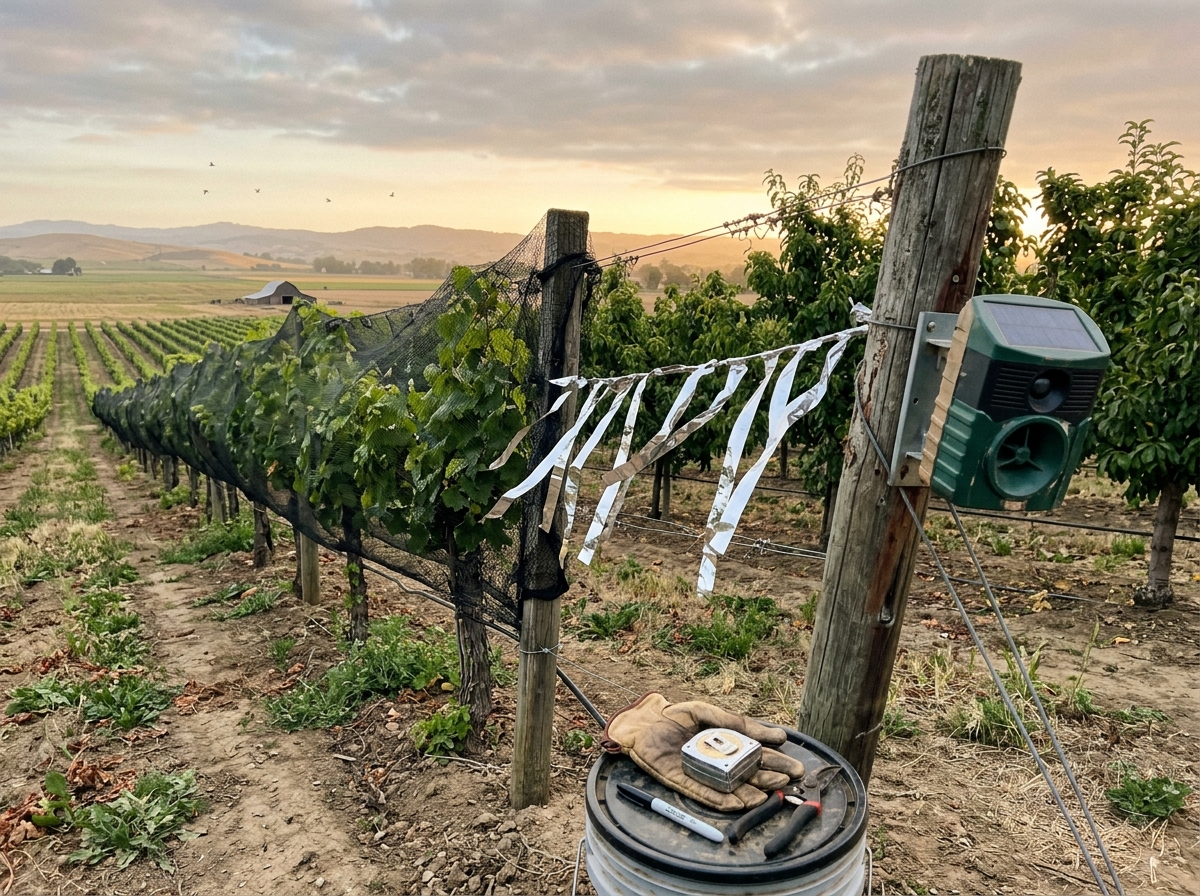
If you've been scrolling Reddit looking for the If you've been scrolling Reddit looking for the best bird deterrents and wondering what is a bird deterrent, you've probably noticed something frustrating: everyone seems to have a different answer, and half the threads end with 'it depends.' That's not unhelpful, it's actually accurate. What works for pigeons on a rooftop in a city is different from what stops a woodpecker attacking a cedar post on your porch, which is different again from dealing with sparrows nesting under your solar panels. The good news is that once you match the deterrent to your specific situation, the answers get a lot clearer. and wondering [what is a bird deterrent](/electronic-and-visual-deterrents/what-is-a-bird-deterrent), you've probably noticed something frustrating: everyone seems to have a different answer, and half the threads end with 'it depends.' That's not unhelpful, it's actually accurate. What works for pigeons on a rooftop in a city is different from what stops a woodpecker attacking a cedar post on your porch, which is different again from dealing with sparrows nesting under your solar panels. The good news is that once you match the deterrent to your specific situation, the answers get a lot clearer.
Best Bird Deterrent Reddit: What Works by Location

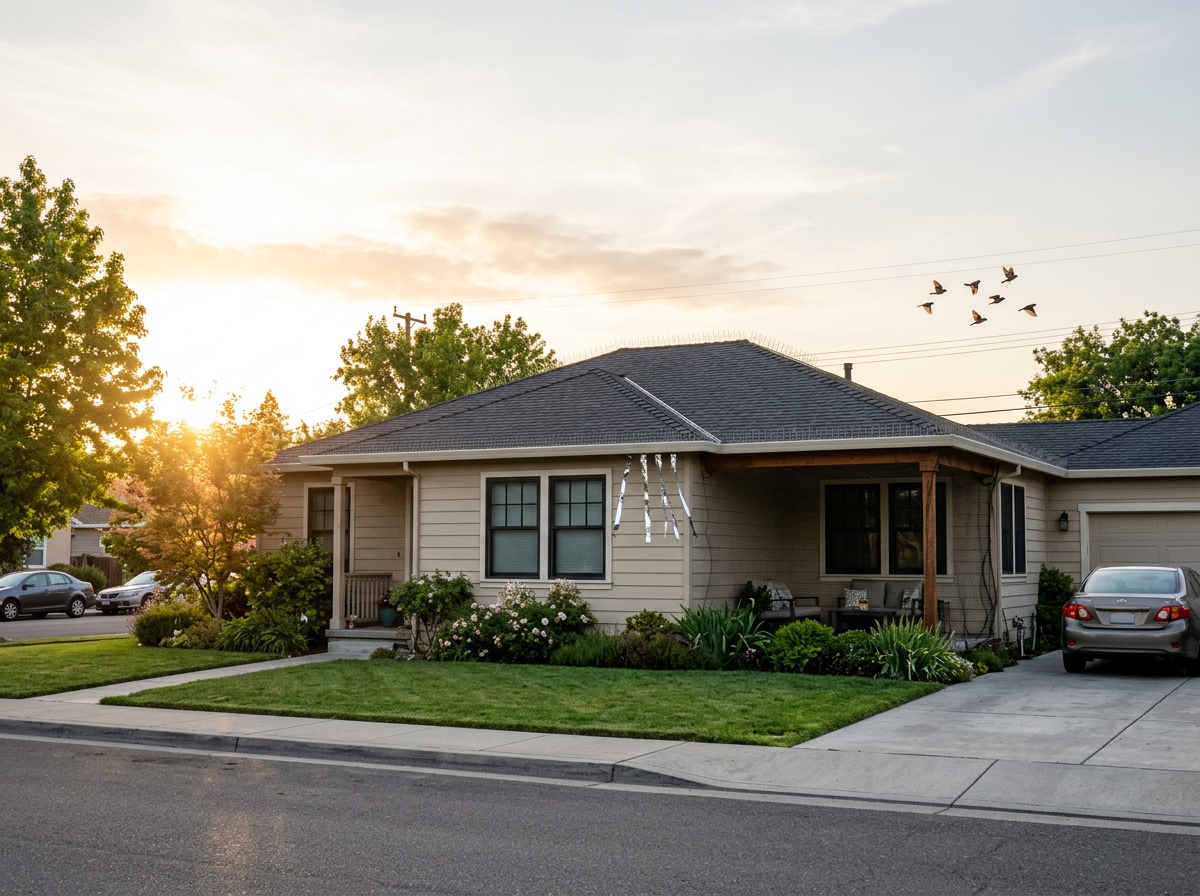
This guide translates the best real-world Reddit advice into concrete recommendations, organized by problem area and deterrent type. You'll know what to buy first, how to install it correctly, and exactly how long to wait before switching tactics or calling a pro.
How Reddit typically ranks bird deterrents (and why results vary)
Reddit threads on bird deterrents almost always start the same way: someone recommends a product they swear by, then three other people say it did nothing for them. That's not because anyone is lying. It's because three variables drive almost every outcome: bird species, target location, and whether you're preventing birds from landing in the first place versus trying to break an established roost or behavior.
A great example comes from a r/Ornithology thread where a user found a deterrent that worked brilliantly on house sparrows but had zero effect on swallows sharing the same space. Same product, same yard, completely different results. Species behavior matters enormously. Pigeons are creatures of habit and hard to dislodge once roosted. Woodpeckers are often responding to a specific stimulus (insects, resonance, or territory marking) so you need to address the 'why' alongside the deterrent. Songbirds like sparrows are adaptable and may habituate to scare devices faster than larger birds.
Location matters just as much. A deterrent hung on a porch ceiling behaves differently than one mounted on a roofline or placed near a pool. Coverage density, height, and angle all change effectiveness. And if birds are already nesting or roosting, you're working against a much stronger behavioral drive than if you're trying to stop them from ever landing. Exclusion methods (physical barriers) consistently rank highest on Reddit for established problems, while sensory deterrents get better reviews for prevention.
Best bird deterrents by problem area
Patio and covered outdoor spaces
Patios attract birds because they offer shelter, perch points, and often a food source nearby. The most effective first step is moving any bird feeders or baths at least 10 to 15 feet away from the structure. Beyond that, physical spikes on ledges and beams eliminate landing spots, and reflective deterrent discs or holographic tape provide a secondary visual deterrent. The discs get mixed reviews on Reddit but work better in breezy, sunny locations where movement and light reflection are consistent. In calm or shaded areas, they're far less effective.
Windows
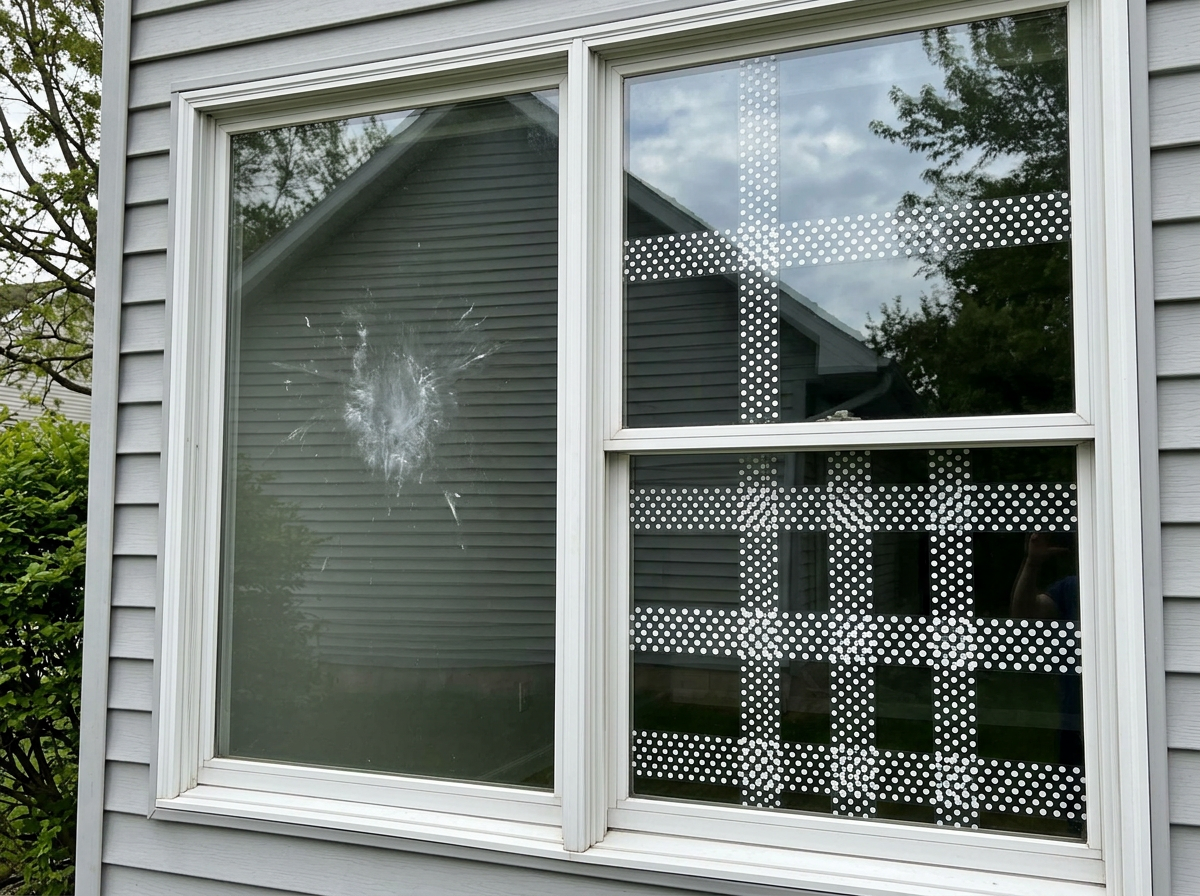
Window problems come in two forms: birds striking the glass (a collision problem) and birds attacking their own reflection (a territorial behavior problem). For collisions, the critical Reddit insight from multiple threads is that deterrents must be placed on the outside of the glass to work. Decals or window marker tape applied on the inside do little because they don't break up the external reflection. Coverage density matters too: markings should be no more than 2 inches apart horizontally and 4 inches apart vertically to be effective. For territorial birds repeatedly striking the same window, blocking the reflection entirely using window film, external screens, or temporary soap is more reliable than visual scare tactics.
Pool areas
Pools attract wading birds and waterfowl, particularly herons and ducks. Physical exclusion isn't practical here, so the best approach is a combination of a realistic predator decoy (a blue heron decoy works well to deter other herons, since they're territorial), reflective tape along the pool edge, and an automatic pool cover when the pool isn't in use. If ducks are establishing a habit, you need to act within the first day or two because they imprint on locations quickly.
Gardens
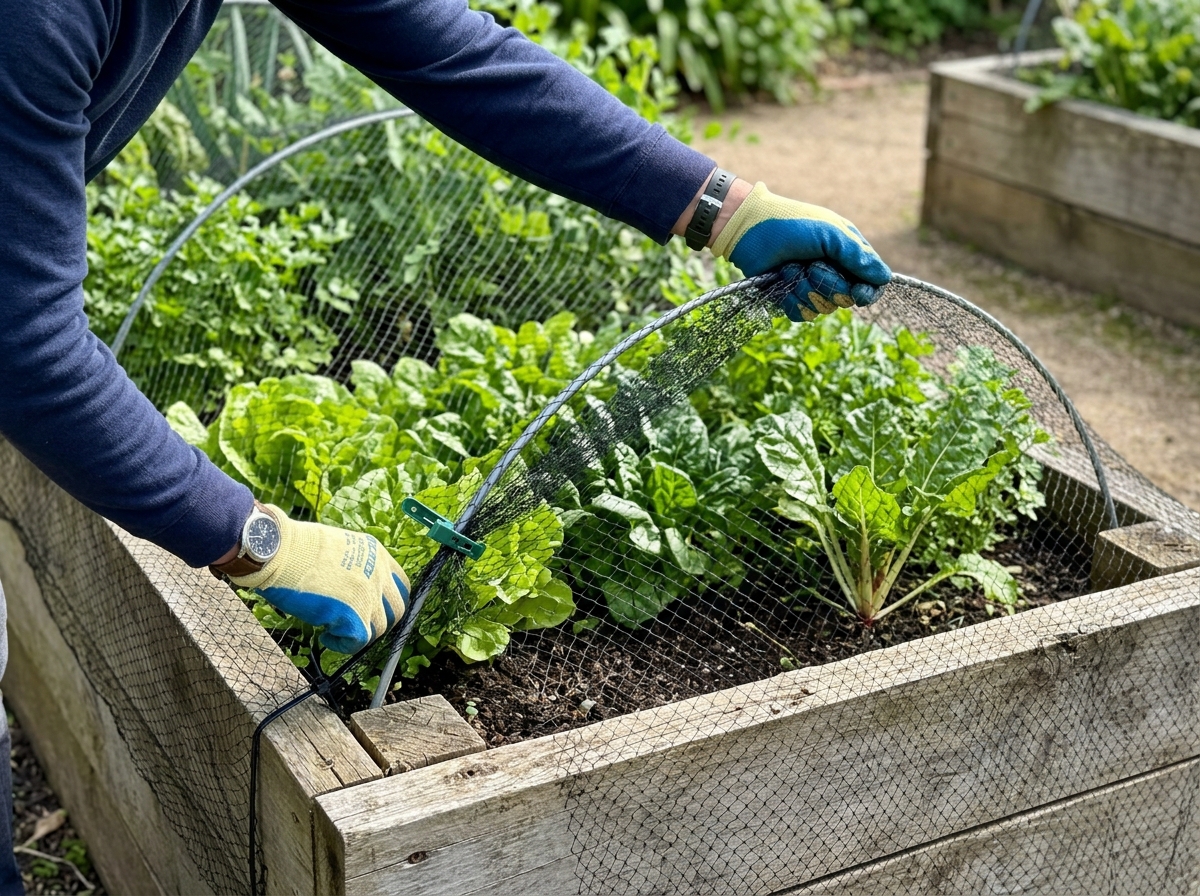
Garden bird problems are usually about crop damage or soil disturbance. Netting is the most reliable long-term solution, placed directly over beds or fruit trees. Reflective tape and pinwheels help as supplementary deterrents but work best when moved regularly, since birds habituate to stationary visual deterrents within a week or two. Scarecrows follow the same pattern: effective for a few days, then ignored. Combine visual deterrents with physical barriers for the best results.
Roofs and gutters
Rooflines and gutters are high-priority roosting spots, especially for pigeons, starlings, and sparrows. Physical exclusion is the gold standard here. Spikes on ridge caps, chimney caps, and parapet ledges physically prevent landing. Gutter guards block nesting material from accumulating. For active roosts where birds have been established for more than a couple of weeks, expect a longer battle and consider professional installation, since working on rooflines safely is not straightforward.
Solar panels
The gap between solar panels and the roof is one of the most attractive nesting sites birds can find: protected, elevated, warm, and rarely disturbed. Once birds are nesting under panels, removal typically requires a pest control professional because active nests may have legal protections depending on the species and your location. Prevention is much easier: panel perimeter mesh or clip-on critter guard systems physically seal the gap and are the only method with consistent long-term results. Spikes on panel edges help secondarily but don't address the underside gap.
Physical barriers that reliably stop birds
Across Reddit, the recurring consensus from people who've actually solved their bird problems (rather than just tried something) points to physical barriers as the most reliable category. When a r/pestcontrol commenter says 'put bird netting up under the whole underside,' that reflects a pattern: exclusion beats deterrence for established problems.
Bird spikes
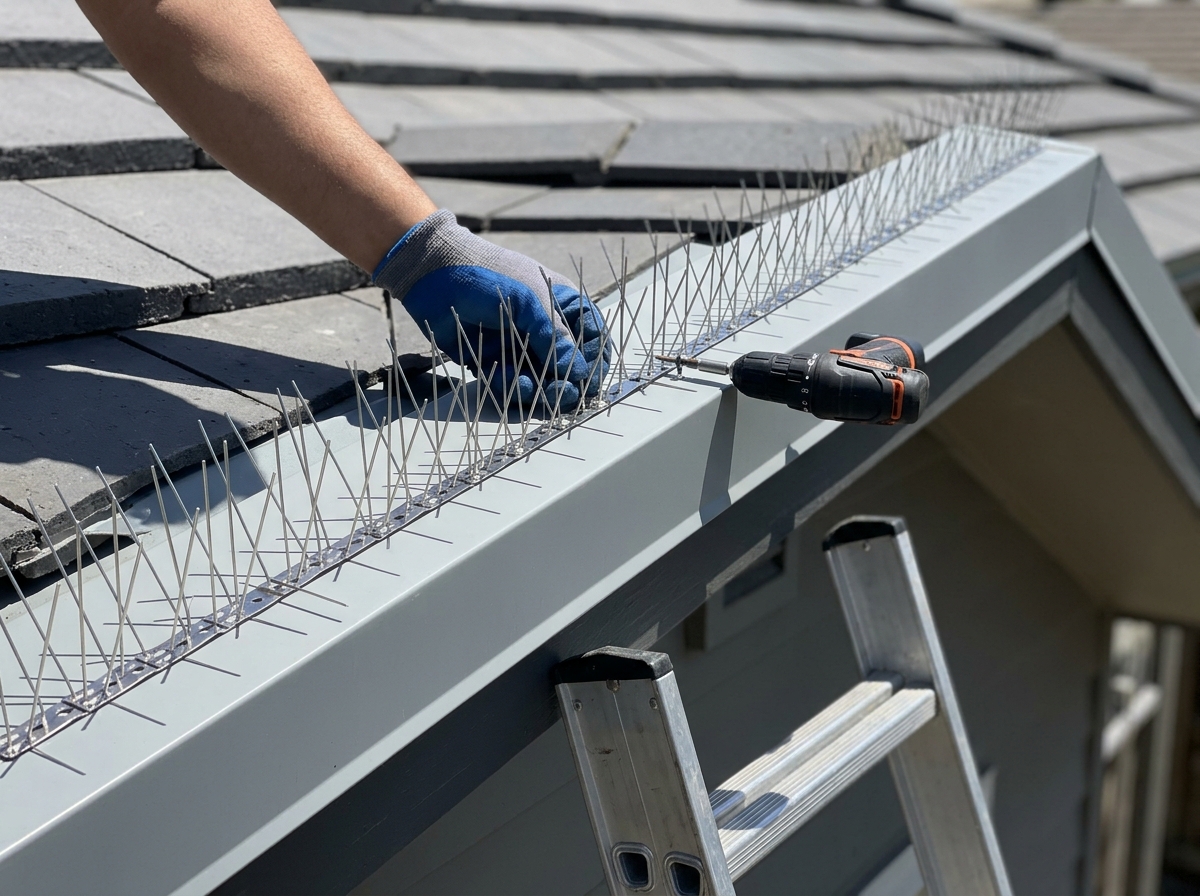
Spikes work by physically removing landing space on ledges, beams, rooflines, and window sills. They're most effective for larger birds like pigeons and gulls. For smaller birds like sparrows, the spacing between spike rows matters: standard pigeon spike spacing is too wide and sparrows will simply nest between the rows. Look for narrow-spacing spike strips specifically rated for small birds. Stainless steel spikes are worth the extra cost over plastic because UV exposure degrades plastic significantly within two to three years.
Netting and screening
Bird netting is the most versatile physical barrier and works for gardens, patio overhangs, building facades, and solar panel perimeters. The mesh size you choose should match the bird you're excluding: 3/4 inch mesh for pigeons and larger birds, 1/2 inch for starlings and blackbirds, and 1/4 inch for sparrows. Polypropylene UV-stabilized netting holds up better outdoors than basic polyethylene. Install it taut with no gaps or sag points, because birds will find and exploit any gap larger than their body width. For gardens, drape netting over hoops rather than directly onto plants so birds can't peck through the mesh.
Panel and gap screening
For solar panels and porch undersides, purpose-built clip-on mesh systems attach directly to the panel frame without drilling into the panel itself. These are preferable to DIY wire mesh setups because improper installation can void panel warranties. Make sure any screening is checked and reattached annually, as weather and thermal expansion can loosen clips over time.
Sensory deterrents and how to actually make them work
Visual deterrents
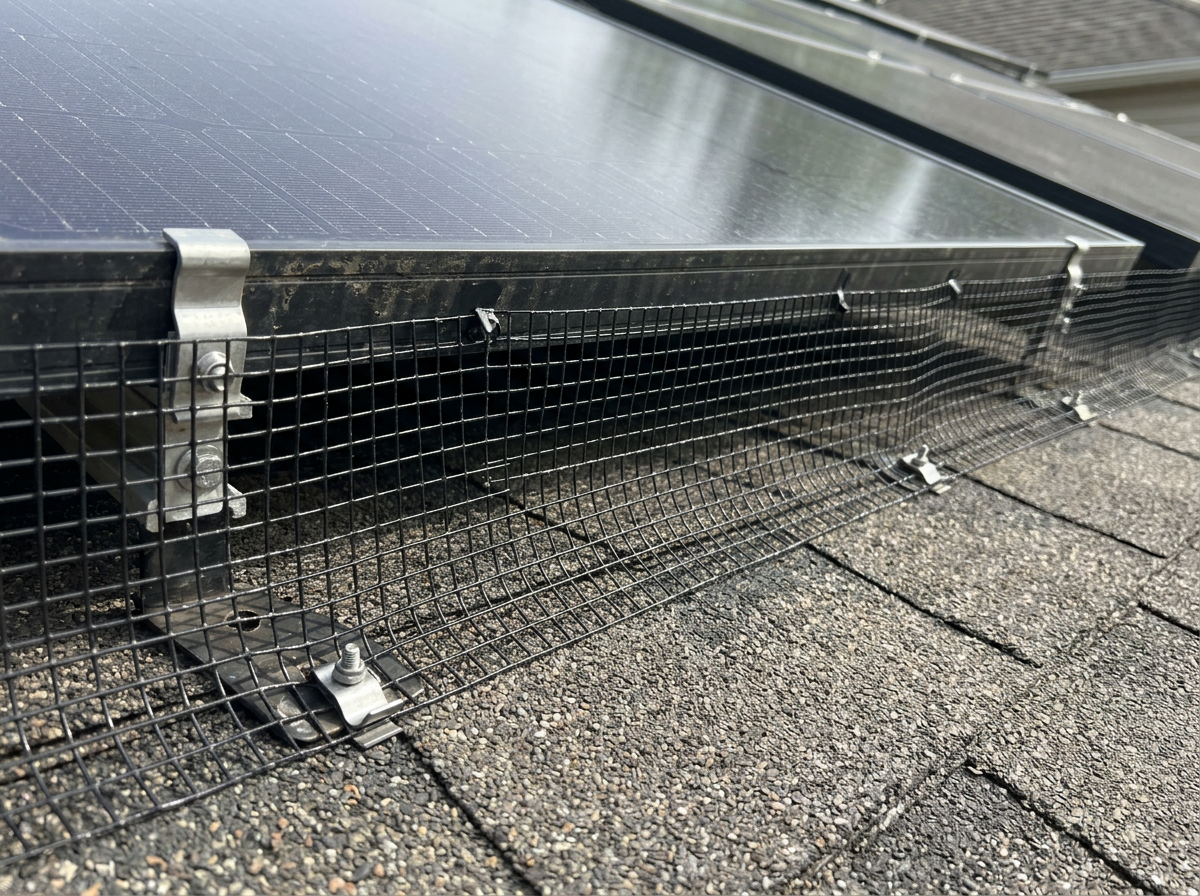
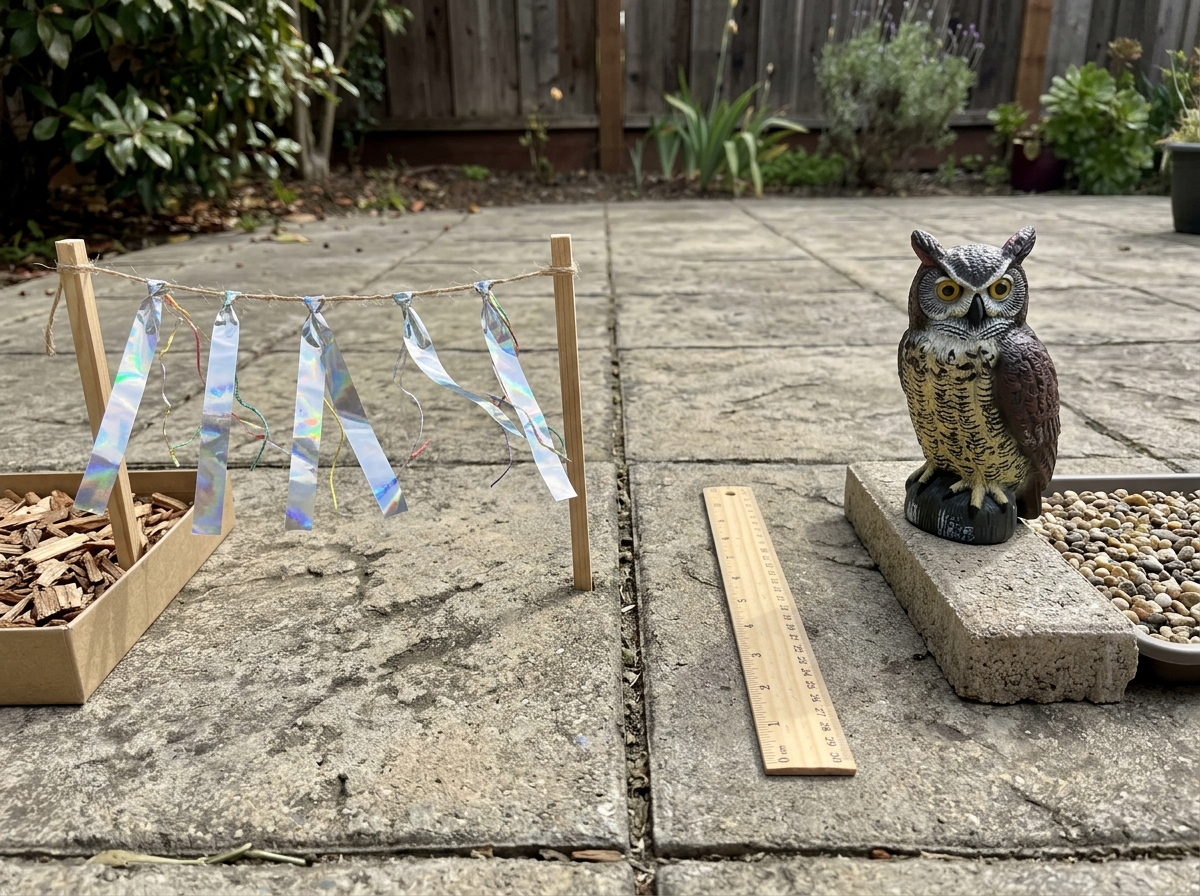
Visual deterrents include reflective discs, holographic tape, predator decoys (owl statues, hawk kites), and predator-eye balloons. They work by triggering an avoidance response. The critical failure mode, which comes up repeatedly in Reddit threads, is habituation: birds figure out within days to weeks that nothing actually happens, and they stop reacting. To slow habituation, move or rotate visual deterrents every three to five days, combine multiple types, and use them in open, exposed areas where the movement and light effects are maximized.
Owl decoys get particular attention because they seem intuitive but often disappoint. A static owl statue placed in one spot quickly becomes invisible to local birds. A mounted, moving owl decoy with a rotating head performs better, but still benefits from being repositioned weekly. Predator kites shaped like hawks, which fly on a pole above gardens, tend to outperform static decoys because the movement is more convincing.
Sonic and ultrasonic deterrents
Sonic devices play distress calls or predator calls through a speaker, while ultrasonic devices emit high-frequency sound above the human hearing range. Sonic devices have more consistent evidence behind them and are generally more effective, particularly for open areas like fields, large patios, and commercial rooftops. They work best when the species-specific distress calls match the target bird, so look for devices with programmable or species-specific call libraries.
Ultrasonic devices are more controversial. Birds hear differently from humans and there is limited evidence that ultrasonic frequencies alone reliably deter common pest species in open outdoor environments. They tend to show more promise in enclosed spaces like attics and warehouses. If you go the ultrasonic route, don't treat it as a standalone solution outdoors.
For both sonic types, placement is critical. The sound needs to reach the problem area without being blocked by walls, dense vegetation, or building overhangs. Coverage specs on product labels are usually measured in ideal open-air conditions, so expect real-world coverage to be 30 to 50 percent smaller. Neighbor impact is also a real consideration with sonic devices: check local noise ordinances before installing anything that runs at night or at high volume.
Chemical repellents: what works, what doesn't, and what to watch out for
Bird repellent gels and chemical deterrents are a real category with genuine use cases, and they come up in Reddit threads more than people expect. In one r/HomeMaintenance thread, a user specifically called out Bird-X deterrent gel as the method that finally worked for their woodpecker problem after other approaches failed. Gels work by creating a sticky, uncomfortable surface that birds dislike landing on. They're best suited for narrow ledges, beams, window sills, and sign edges where spikes aren't practical or aesthetically acceptable.
The downsides are real: gel needs to be reapplied every six to twelve months depending on weather exposure, it can trap small birds and insects if applied too thickly (use a thin, even bead), and it collects dust and debris which reduces effectiveness and looks messy. It's not suitable for areas where children or pets might come into contact with it, or where it could run onto surfaces you care about.
Methyl anthranilate sprays (a grape-extract-based chemical) are used in larger-scale settings like sports fields, commercial grounds, and [agricultural contexts](/electronic-and-visual-deterrents/agricultural-experts-are-trying-to-develop-a-bird-deterrent). They irritate birds' mucous membranes and are generally considered non-toxic to birds and humans at labeled concentrations, but effectiveness in residential settings is limited because the active compound evaporates and requires repeated application, especially after rain.
Avoid any products marketed as poisons or toxicants for birds unless you have a professional license to use them. Many bird species are protected under the Migratory Bird Treaty Act, and using toxic baits or traps without permits is illegal and carries significant penalties. Even for unprotected species like pigeons and house sparrows, check your local regulations before using anything beyond gel or spray repellents.
Comparing the main deterrent methods
| Method | Best for | Effectiveness | Habituates? | Maintenance | DIY-friendly? |
|---|---|---|---|---|---|
| Bird spikes | Ledges, beams, rooflines | High (large birds) | No | Low (annual check) | Yes |
| Netting / mesh | Gardens, panels, patio overhangs | Very high | No | Low-medium | Yes (ground level); Pro recommended for roofs |
| Reflective / visual | Open areas, prevention only | Low-medium | Yes (within weeks) | Medium (must rotate) | Yes |
| Predator decoys | Gardens, open yards | Low-medium | Yes (within days) | Medium (must reposition) | Yes |
| Sonic devices | Open areas, large spaces | Medium-high | Partial | Low (power, occasional cleaning) | Yes (check noise laws) |
| Ultrasonic devices | Enclosed spaces | Low outdoors | Partial | Low | Yes |
| Repellent gel | Narrow ledges, beams | Medium | No | High (reapply 6-12 months) | Yes |
| Chemical sprays | Large open grounds, turf | Low-medium residential | No | High (reapply after rain) | Yes (check labels) |
DIY setup vs hiring a pro
Most ground-level and reachable installations are realistic DIY jobs. Netting over garden beds, spike strips on porch railings and low beams, visual deterrents hung from pergola rafters, and gel applied to window sills are all straightforward. The mistakes people make are predictable: they under-cover the target area, leave gaps, choose the wrong mesh size, or place visual deterrents somewhere with no movement or light. Take the time to measure the area properly and buy more coverage than you think you need.
Roof installations change the calculus. Working on pitched roofs or at parapet height isn't just inconvenient, it's genuinely dangerous without the right equipment and experience. If your problem is on the roofline, gutters, chimney, or under solar panels, strongly consider professional installation. A properly installed professional netting or spike system will also last significantly longer than a rushed DIY effort at height, and most pest control companies that specialize in bird control will warranty their work.
Active roosts with large bird populations are another case for professional help. If you have dozens of pigeons or starlings that have been roosting in the same location for months, the cleanup alone (droppings, feathers, nesting material) involves health hazards from histoplasmosis and other pathogens. Professional wildlife control companies handle exclusion, cleanup, and installation as a combined service.
Troubleshooting when your deterrent stops working
The most common failure modes have predictable fixes. If birds habituate to visual or sonic deterrents, add variety and movement: rotate decoy positions, swap reflective tape for different colors or patterns, or adjust sonic device schedules so calls don't play at predictable intervals. If netting or spikes stop working, check for gaps, sagging, or damage from weather or wildlife. Birds will find even a small entry point.
If you've had a deterrent in place for four to six weeks with no improvement, it's a signal that either the wrong method is deployed for your species and location, or the birds have an underlying attraction (food source, nesting site, insects in the structure) that's stronger than the deterrent. Identify and eliminate the underlying attractant first, then reassess.
When to call a professional
- Birds are roosting or nesting in an enclosed space (attic, eaves, solar panel underside) and have been there for more than two weeks.
- The problem is on a roof, chimney, or any location requiring ladder or roof access above one story.
- You have a large pigeon or starling flock (more than 10 to 15 birds) that returns daily despite deterrents.
- There is visible accumulation of droppings indicating a long-established roost (health hazard requiring professional cleanup).
- A protected species (swallows, raptors, or migratory songbirds) is involved and you're unsure of legal constraints.
- You've tried two or more appropriate deterrents correctly for six or more weeks and the problem persists.
Your practical starting point, based on situation
If birds are landing and perching but not yet nesting, Start with physical spikes or netting on the exact surface they're using. Add a visual deterrent as a secondary measure, and give the setup three to four weeks before evaluating. If birds are striking windows, apply external window deterrent tape or film immediately, and make sure coverage density is sufficient (no more than 2 inches between marks horizontally). If birds are in an active roost under panels or in a structure, skip DIY deterrents for that specific problem and go straight to professional exclusion.
The pattern from real-world Reddit experience is consistent: people who solve their bird problem usually started with the right physical barrier for their location, maintained it properly, and addressed whatever was attracting birds in the first place. People who stayed frustrated either chose the wrong deterrent type, under-deployed it, or relied on scare tactics alone against birds that had already established strong behavioral habits in that spot.
Start specific, install correctly, give it a reasonable timeframe, and escalate if needed. That approach works whether you found it on Reddit or anywhere else.
FAQ
Can I use the same bird deterrent for all species, like people do on Reddit?
Yes, but only for specific problems. If birds are already established (active roosting or nesting), exclusion and cleanup usually outperform deterrents that rely on “scaring.” For prevention (stopping first landings), you can combine a barrier approach with a short-term visual or sonic aid, then remove the scare device once the physical barrier is in place and stable.
What should I do if a window deterrent didn’t work after a week?
If birds have been hitting the same window for several days, treat it as territorial or collision behavior rather than “scaring.” Apply external window film or external marker/tape on the outside surface, ensure the pattern density is tight, and keep it up continuously. If you only apply an inside decal, birds often keep returning because the outside reflection remains unchanged.
How long can I wait before I remove or replace a deterrent if birds keep coming back?
Do not. If there’s any chance the birds are nesting or roosting (especially under solar panels, in gutters, or under porch soffits), removal timing can trigger legal and safety issues and birds can re-occupy quickly. In these cases, use prevention hardware like perimeter mesh first, then escalate to a professional for active areas.
If deterrents fail, what else should I look for besides the birds?
Start by moving attractants 10 to 15 feet away, but also check “hidden” attractants: insects near exterior lights, spilled pet food, open trash lids, and standing water from irrigation leaks or clogged gutters. Many “deterrent failures” on Reddit are actually birds following a reliable food or insect source, or returning to a nearby water point.
What’s the most common installation mistake that makes deterrents fail?
For spikes and netting, measure the entire landing pathway, not just the most obvious spot. A common mistake is leaving a narrow adjacent ledge or gap that birds use as an alternative approach. Add coverage to corners, transitions (roofline to wall, beam to post), and any nearby “step points” within a bird’s flight distance.
How can I prevent birds from getting used to visual decoys or sonic devices?
Yes, habituation is a real issue, and it’s often slower for larger birds but faster for adaptable songbirds. The practical fix is to add movement and change cues, rotate decoy positions every few days, and combine methods (for example, netting plus a visual aid during the first week). If you do only one static scare item, expect it to stop working.
Will bird netting work if it’s not perfectly taut?
For netting, sag and gaps are the enemy. Use enough tension that the mesh stays flat, and secure edges so birds cannot crawl under or sideways through a small opening. Also consider draping netting over hoops for gardens so birds cannot peck through the net into plants.
Why do sonic bird devices sometimes work outdoors but not from my vantage point?
Sonic devices are most sensitive to placement and sound blocking. Place the speaker where sound reaches the target area directly, not behind overhangs, dense shrubs, or walls, and expect less coverage in real conditions than the label claims. Also check neighbor noise rules, especially if the device runs at night.
What are the key tips for using bird repellent gel without creating a mess or new problems?
If you’re using gel, keep it as a thin, even bead, and cover only the surface birds are landing on. Reapplication is often weather-dependent, so plan to inspect monthly after heavy rain or if temperatures are extreme. Avoid areas where pets or children might touch it, and clean residue so it doesn’t become a dust trap that reduces effectiveness.
Should I try DIY deterrents under solar panels if birds are already there?
Yes, and it’s one of the fastest ways to “lock in” results. If birds are already roosting under panels or in rooflines, skip DIY deterrents for that specific active area and go straight to exclusion and cleanup. For prevention, perimeter mesh or clip-on guard systems are the consistent long-term solution.
Is it ever safe or legal to use bird poisons for nuisance birds?
In many jurisdictions, using toxic baits or traps for birds requires specific permits and can be illegal for protected species. Even when a product is marketed for certain nuisance species, local rules can differ. If you are considering anything beyond gel or spray repellents, confirm legality or use a licensed provider.
My deterrent has been up for a month, what does that usually mean?
Treat a “no improvement after four to six weeks” result as a diagnostic flag. Either the deterrent type does not match the species and behavior pattern, or an attractant is stronger (food, nesting cavity, insects, water). The next step is to identify and remove the attractant first, then re-evaluate the deterrent coverage and placement.
Agricultural Experts Guide to Bird Deterrents That Work
Practical guide to bird deterrents: identify species, choose barriers and sensory tactics, prevent habituation safely, m