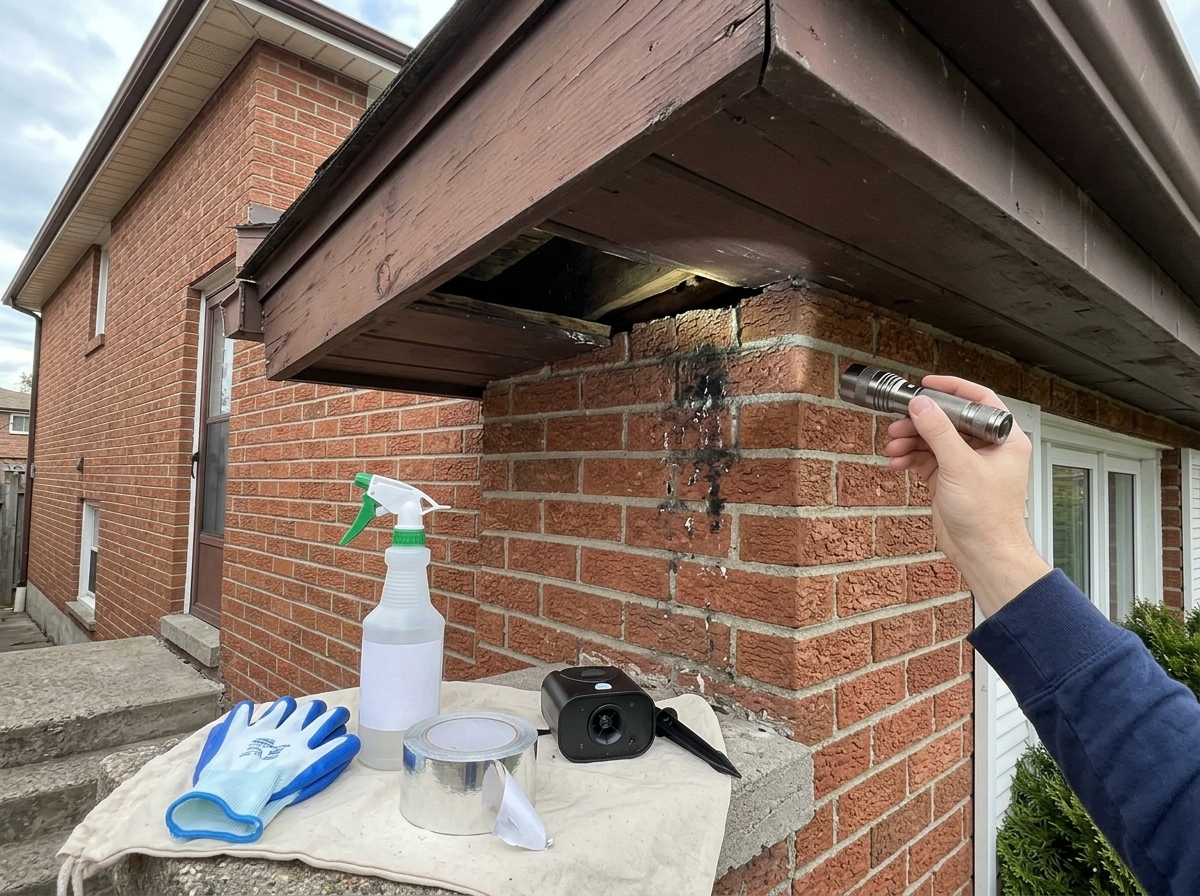
A bird deterrent is any device, material, or method designed to stop birds from landing, perching, roosting, or nesting on a specific area. The goal is not to harm or trap birds, but to make a surface or space uncomfortable or uninviting enough that birds choose to go elsewhere. That distinction matters both legally and practically, and it separates deterrents from removal or lethal control, which require permits and are regulated under federal law.
What Is a Bird Deterrent: Types, Placement, and Best Fixes

Marcus Weatherby
23 Mar 2026
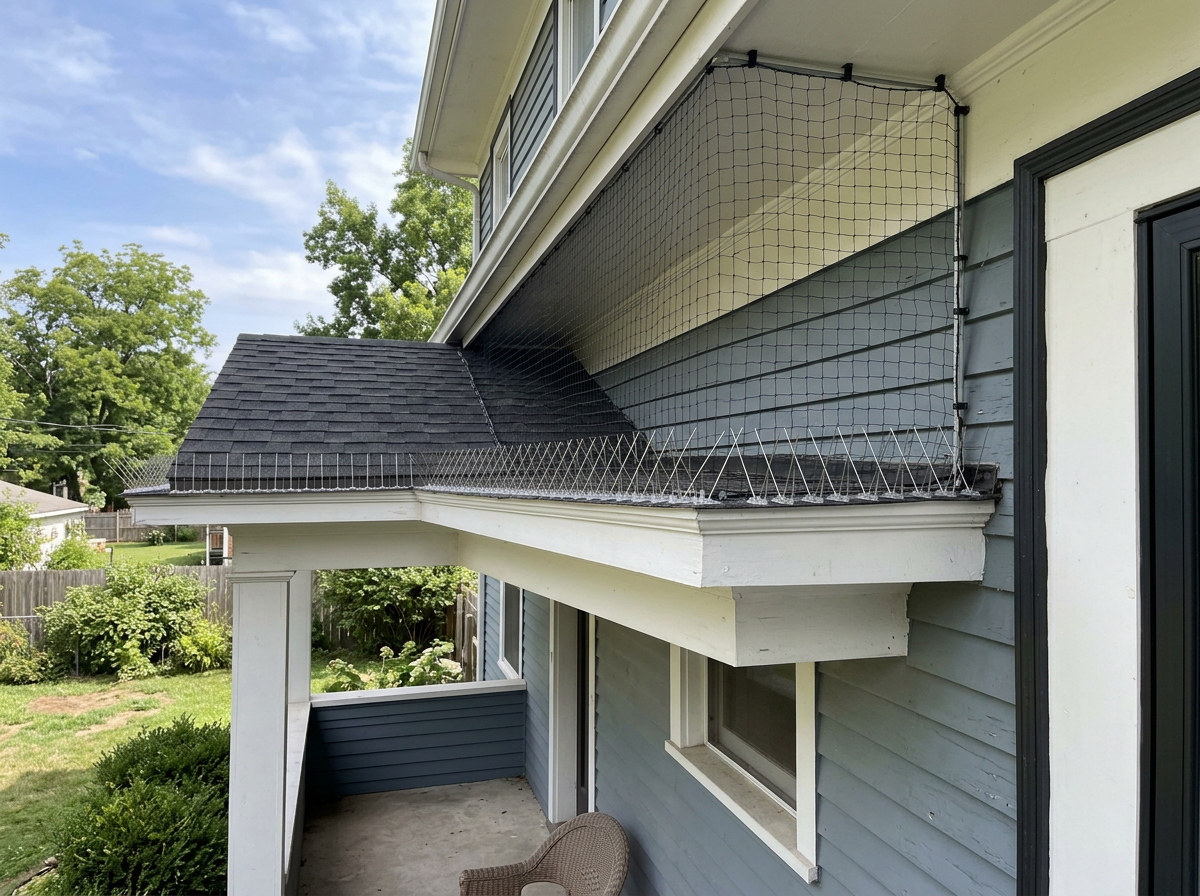
What a bird deterrent actually does
Most bird damage comes down to three behaviors: landing and resting (loafing), roosting overnight or in large groups, and nesting. Each one creates a different level of problem. Loafing birds leave droppings and noise. Roosting flocks cause structural damage and health hazards from accumulated waste. Nesting birds are the hardest to deal with because once a nest is active, federal law under the Migratory Bird Treaty Act generally prohibits disturbing it, the eggs, or the young without a permit.
A deterrent works upstream of all three. It makes the target surface physically difficult to grip, visually alarming, audibly threatening, or chemically unpleasant before birds ever settle in. Think of it as environmental design that says 'not here' rather than reactive cleanup or trapping.
Deterrents are also distinct from exclusion in a strict sense. Exclusion means sealing or blocking a gap entirely so birds cannot physically access a space (like screening a vent). A deterrent discourages use of an open surface. In practice, most professionals and IPM programs treat them as complementary tools within the same strategy.
The main types of bird deterrents
There are four broad categories, and understanding what each one actually targets will save you from buying the wrong product for your situation.
Physical barriers
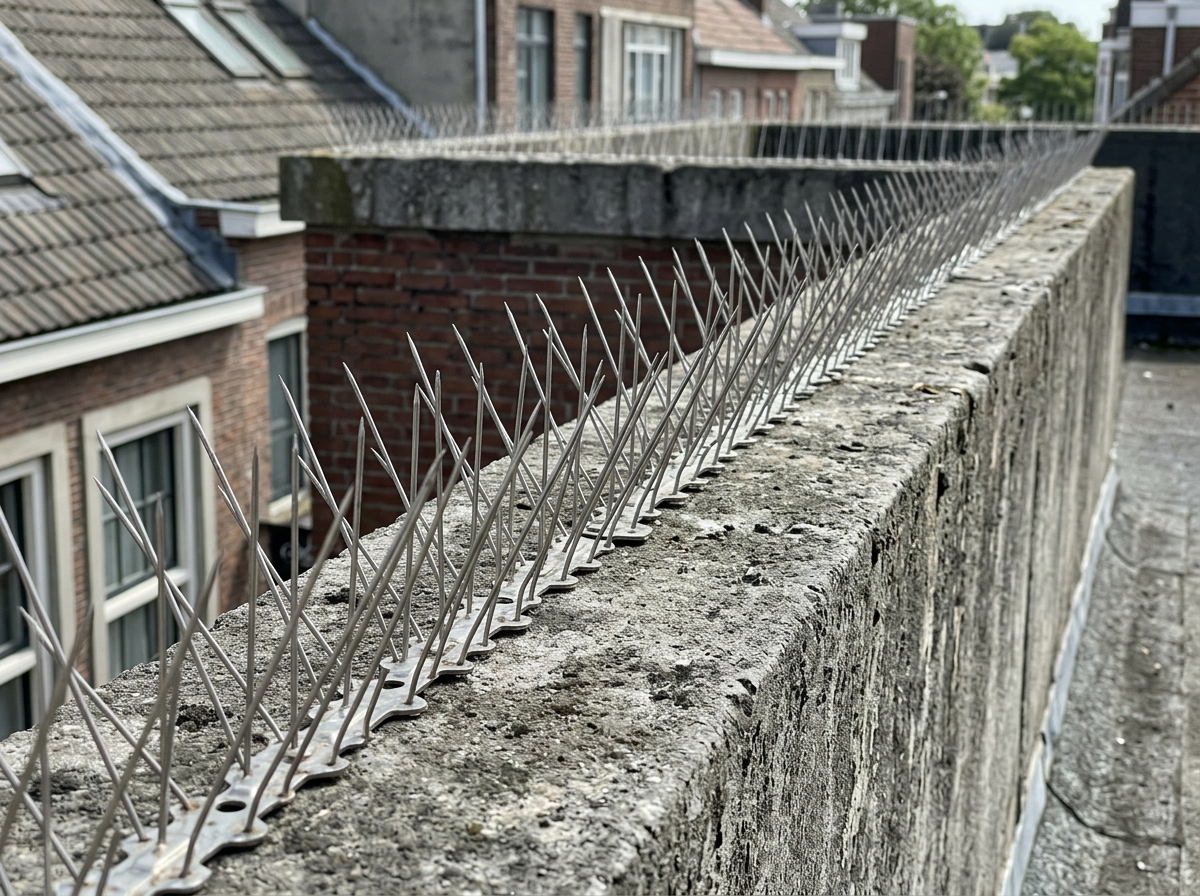
Physical deterrents include spikes, netting, wire systems, monofilament lines, wire coils, and spring wires. They work by denying birds a stable landing or nesting platform. Spikes are the most common choice for ledges, parapets, rooflines, and signs. Netting is better for large open areas like courtyards, under solar panels, or over garden beds. Wire systems and monofilament lines are often used on beams, cables, and boat docks where spikes would be impractical.
These are generally the most reliable deterrent category because they create a permanent physical condition rather than relying on a bird's perception or reaction. They do not habituate. The tradeoff is that installation takes more effort and cost upfront, and they need to be sized and spaced correctly to work.
Visual deterrents
Visual deterrents include reflective tape, predator decoys (owls, hawks, coyotes), predator kites, holographic flash tape, and hanging CDs or foil strips. They work by triggering a fear or avoidance response. The problem is that birds are smart and adaptable. A static fake owl sitting in the same spot for two weeks stops working. Habituation is the primary failure mode for all visual deterrents.
To get real mileage from visual methods, you need movement and variation. Move predator decoys every few days. Use kites or kinetic spinners that move in the wind. Reflective tape needs to be dense enough to create a genuine visual disruption, not just a few strips spaced far apart. Research confirms that sparse deployment is one of the most common reasons reflective tape fails.
Auditory deterrents
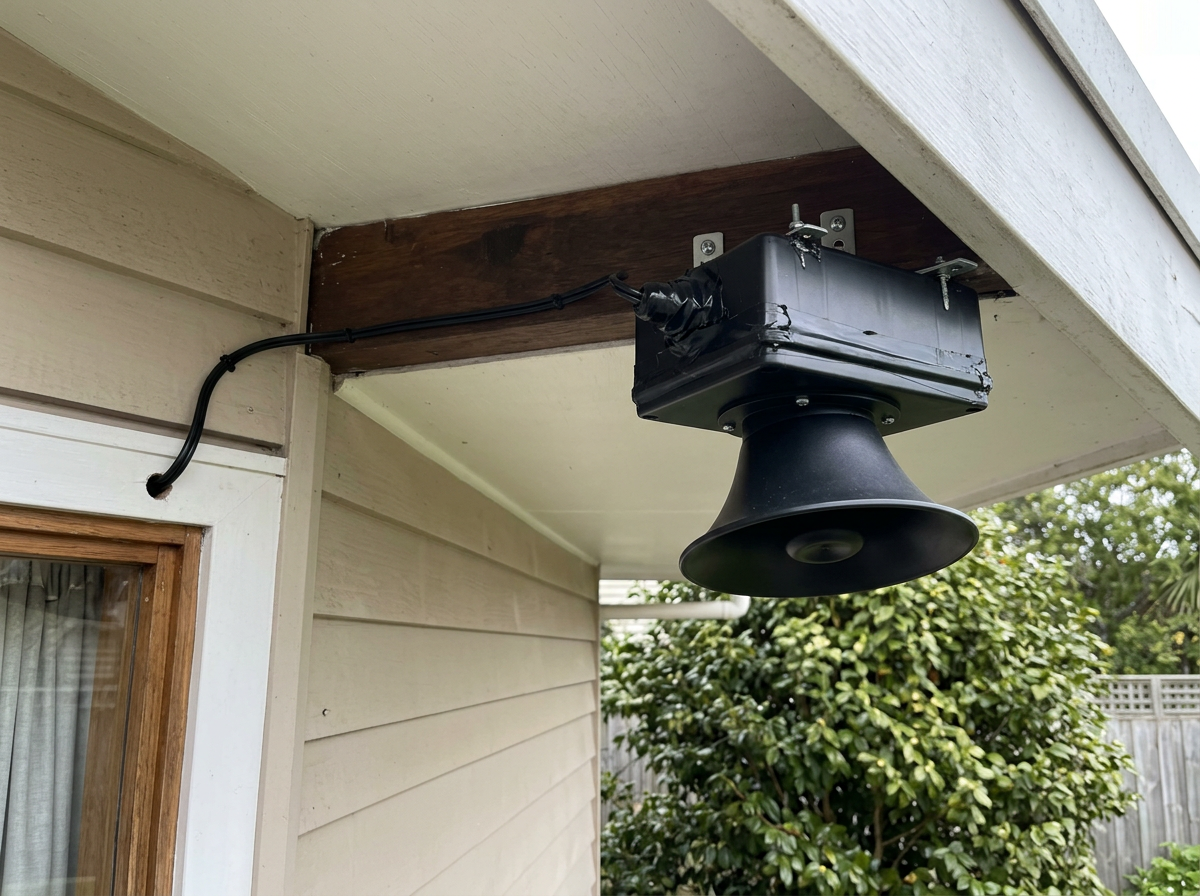
Auditory deterrents use sound to frighten or disorient birds. This includes broadcast distress calls, predator calls, ultrasonic devices, and propane cannons. Distress and alarm call recordings can be effective for some species, especially when used sparingly and combined with other methods. The key word is sparingly: birds habituate to repeated sounds that never result in actual danger. If the cannon goes off every 15 minutes like clockwork, birds learn to ignore it.
Ultrasonic devices are a popular retail product, but the evidence for them is limited, especially for outdoor use where sound disperses quickly. They may have some application in enclosed spaces like bridge culverts, but do not expect an ultrasonic emitter to protect an open patio. Auditory deterrents work best as one layer within a combined approach, not as a standalone fix.
Chemical repellents
Chemical repellents come in two forms: contact repellents that make surfaces sticky or tacky (like polybutylene gel), and taste or smell repellents applied to plants or surfaces. Contact gels are effective on ledges and beams for medium and large birds, though they can gum up smaller birds and require maintenance, especially in dusty or hot environments where they harden or collect debris. Taste repellents like methyl anthranilate (a grape-derived compound used on turf and around water features) are commonly used for waterfowl and starlings on grass or ponds.
Chemical repellents must always be used strictly according to label directions. For any product applied to plants, food-growing areas, or near water, check the label for specific surface restrictions and reapplication intervals. This is non-negotiable.
Choosing the right deterrent for your situation
The right deterrent depends on where birds are landing and what they are doing there. Start by watching the problem area for a few days. Are birds resting briefly between feeding flights (loafing), settling in for overnight roosting, or actively building a nest? Are they on a narrow ledge, a wide flat roof, a garden, under solar panels, or on a window sill? That observation shapes everything.
| Situation | Best deterrent type | Notes |
|---|---|---|
| Narrow ledge or roofline | Spikes or wire systems | Match spike width to ledge width; may need multiple rows on wider surfaces |
| Large flat roof or courtyard | Netting or grid wire | Netting gives full-area coverage; grid wire works for larger birds |
| Garden beds or crops | Netting, visual deterrents, or taste repellents | Netting is most reliable; visual methods need frequent repositioning |
| Solar panels | Panel-specific netting or mesh | Designed to block nesting gaps under panels without damage |
| Patio or deck | Visual deterrents + physical strips | Combine methods; loafing birds respond well to movement cues initially |
| Pond or turf (geese/waterfowl) | Taste repellents or border fencing | Methyl anthranilate on grass; low wire or string barriers around water |
| Windowsills | Spikes or angled ledge strips | Narrow-profile spikes work well; also consider anti-perch coils |
| Pool area | Visual deterrents + decoys | Moving predator kites and poolside reflective tape; remove standing water where possible |
One important concept from building conservation guidance is to focus on 'loafing areas': the spots where birds sit and rest between feeding and flight. These are the highest-value deterrent targets because if you disrupt that habit early, birds are less likely to graduate to full roosting or nesting. Also prioritize any spot where birds nested last year, because birds have strong site fidelity and will return to the same locations season after season.
DIY setup and placement tips
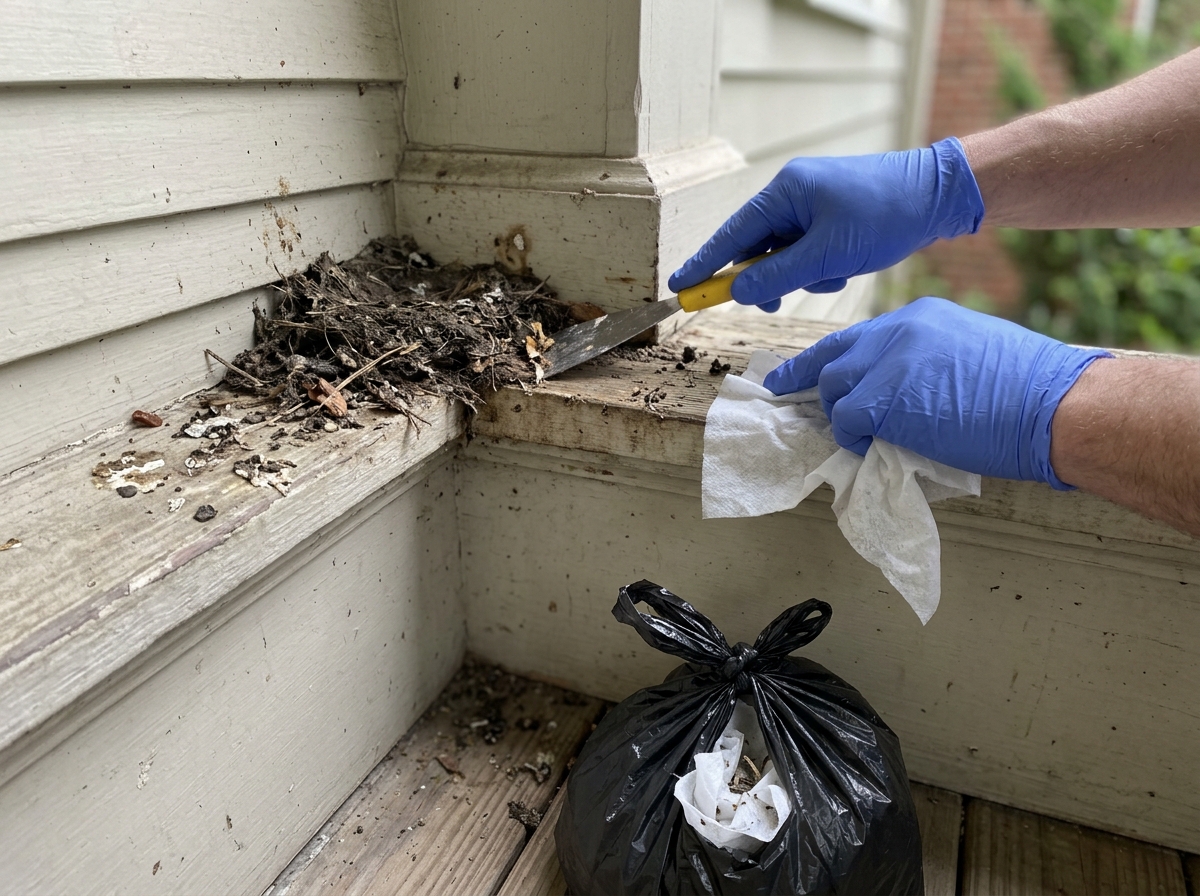
Before you install anything, clean the area thoroughly. Remove old nesting material, droppings, and debris. This is not just about tidiness: bird feces can carry pathogens, and residual nesting scent actively attracts birds back to the same spot. Wearing gloves and a dust mask is strongly recommended during cleanup.
For spikes on ledges, the most common installation mistake is leaving gaps or stretching the spacing between strips too far apart. Follow the manufacturer's recommended coverage density. On ledges wider than about 5 inches, a single row of standard spikes will often leave enough flat space for a bird to land behind or beside them. Use two or more rows staggered across the full width. Do not assume wider coverage automatically means fewer strips needed.
For netting, tension and anchor points matter most. Loose netting that sags can trap birds rather than deter them, which creates a legal and welfare problem. Use proper tensioning hardware and check that the mesh size is appropriate for the target species: smaller mesh for sparrows and starlings, larger mesh is fine for pigeons or gulls.
- Observe and map the exact spots where birds are landing or roosting before buying anything
- Clean and decontaminate the target surface before installing any deterrent
- Choose the deterrent type based on surface shape, bird species, and behavior (landing vs. nesting)
- Follow manufacturer spacing guidelines precisely, especially for spike systems on wider surfaces
- For visual and auditory deterrents, build in a rotation or movement schedule from day one
- Inspect your installation every few weeks, especially after storms or seasonal changes
What to expect, and what to do when birds adapt
Physical deterrents like spikes and netting hold up well over time because birds cannot simply get used to a spike in the way they can get used to a plastic owl. If your physical barrier stops working, the most likely cause is a gap in coverage, physical damage, or a new access point that wasn't there before. Walk the perimeter and look for those gaps.
Habituation is the main failure mode for sensory deterrents. Birds are observant and cautious, but they are also persistent. If a threat never materializes, they will eventually ignore it. To slow habituation, vary the timing and location of auditory devices rather than running them on a fixed schedule. Move visual decoys at least every two to three days. Combine at least two different deterrent types, since the unpredictability of multiple signals keeps birds on edge longer.
Seasonality matters too. Birds are most strongly motivated in spring when nesting instincts are at their peak. A deterrent that worked fine in fall may face more persistent pressure from March through June. If you notice birds testing your setup more aggressively in spring, that is normal and expected. This is the time to reinforce coverage, not assume the system has failed.
If birds are still getting through after you have addressed gaps, increased visual deterrent rotation, and tried combining methods, consider adding a second deterrent category. A ledge with spikes and a nearby hanging reflective kite is harder to work around than either one alone. The integrated approach consistently outperforms any single method.
Safety, legality, and keeping it humane
In the United States, most wild birds are protected under the Migratory Bird Treaty Act. That means you cannot trap, possess, kill, or intentionally disturb a bird or its active nest, eggs, or young without a federal permit. This applies to common nuisance species like starlings, house sparrows, and pigeons somewhat differently (those three are not protected under the MTBA), but the vast majority of songbirds, waterfowl, gulls, and raptors are fully covered. When in doubt, check before you act.
From a welfare standpoint, any deterrent you install must not trap or injure birds. This means netting must be properly tensioned so birds cannot become entangled. Sticky gels should not be used where they can trap small birds, bats, or other wildlife. If you are working on an older building or a structure with known bat activity, check that netting or exclusion work does not block bat roost access, as bats carry their own protected status under the law.
Some auditory and light-based deterrent devices emit radiation or intense light. If your device falls into this category, the manufacturer instructions will note required eye protection for the person operating or installing it. Do not skip that step.
- Do not disturb an active nest with eggs or chicks, even on your own property, without confirming the species' legal status
- Never use sticky gel products near areas where small birds, bats, or other protected wildlife could become trapped
- Always read chemical repellent labels and follow application restrictions for surfaces, water proximity, and food-growing areas
- Check local ordinances: some municipalities have additional restrictions on noise-producing deterrents in residential zones
- If you are unsure about the species involved, consult a wildlife agency or licensed pest control professional before proceeding
When to bring in a professional
Most straightforward deterrent situations, a pigeon problem on a ledge, sparrows nesting in a porch corner, geese on a lawn, are genuinely DIY-friendly if you catch them early. The time to call a professional bird control provider is when the situation has already escalated beyond prevention.
If you have an active nest with eggs or chicks, stop. A professional can advise on timing, species identification, and legal waiting periods before any exclusion work begins. Disturbing a protected active nest is a federal violation, and a professional will know exactly how to handle the timeline legally.
Large roosting flocks on commercial buildings, roofs, or in industrial settings require a scale of deterrent installation and ongoing management that goes beyond what a homeowner can realistically maintain. Professionals will assess the full perimeter, identify every loafing and roosting zone, and install systems with the precision that makes a real difference at that scale.
If you have already tried two or more deterrent types, kept up with rotation and maintenance, and birds are still persisting after a full season, that is also a signal that the problem may need a professional assessment. Sometimes the issue is a structural feature or nearby food source that you cannot address without expert guidance. A reputable bird control company will do a site inspection and recommend a combined solution, which may include physical barriers, habitat modification, and professional-grade deterrent systems working together.
For anyone comparing specific product recommendations, looking at what works for a particular species, or trying to find a supplier, For anyone comparing specific product recommendations, looking at what works for a particular species, or trying to find a supplier, dedicated guides on the best bird deterrents and where to buy bird deterrents can help you narrow down options once you know which category fits your situation.
FAQ
Is a “bird deterrent” the same thing as a scare device like a fake owl?
No. A deterrent is any method that makes a landing or roosting spot uncomfortable or uninviting, but it can be permanent (like properly spaced spikes) or behavioral (like moving decoys). A fake owl is typically a visual deterrent and often fails if it stays in one spot, so you usually need rotation or pairing with another category.
How do I tell whether I’m dealing with loafing, roosting, or nesting?
Watch timing and behavior. Brief visits during the day between feeding usually indicate loafing, repeated occupation of the same area overnight suggests roosting, and repeated carrying or placement of nesting material (plus persistent attendance) indicates nesting. This matters because active nests are treated differently legally and practically.
Can I use deterrents year-round, or should I wait for a specific season?
You can install year-round, but spring often increases pressure because nesting is strongest. If birds are testing your setup more aggressively from March to June, that usually means your deterrent needs reinforcement or better coverage rather than abandoning it.
What’s the most common DIY mistake that makes deterrents “not work”?
Coverage gaps. With spikes, this is usually incorrect spacing or leaving a flat “landing ledge” adjacent to the spikes. With netting, it’s loose or poorly anchored material that sags or allows birds to access the area from an edge or new entry point.
Do visual deterrents stop working immediately, or only after birds get used to them?
They commonly work at first, then fade as birds habituate. The practical fix is movement and variation, such as changing decoy location every few days and using motion (kites or kinetic spinners) instead of a static display.
How often should I rotate decoys or change the pattern?
If you use predator decoys or hanging visual pieces, plan to move them at least every two to three days. Rotation is especially important if birds begin “testing” the spot by landing nearby, perching briefly, or returning to the same corner repeatedly.
Are ultrasonic devices worth trying outdoors?
Usually not as a standalone outdoor solution. Sound spreads and disperses quickly outdoors, so the effect can be inconsistent. They may be more relevant in enclosed or semi-enclosed spaces, but for open patios and ledges, combine methods rather than relying on ultrasound alone.
Can I use bird deterrent chemicals on plants or near water?
Only if the label explicitly allows it for your exact surface and location. Taste and smell repellents can be effective for specific bird issues on turf and around water features, but reapplication intervals and surface restrictions are label-specific, and skipping them can lead to failure.
Will sticky gels harm birds or other wildlife?
They can, especially if they create a trap for smaller birds or for wildlife that gets stuck to the treated surface. A safer decision aid is to restrict sticky products to the surfaces and bird sizes the label is designed for, and avoid areas where small birds, bats, or other wildlife might contact the material.
Can I place deterrents over an active nest if the birds are causing damage?
You should not. If there are eggs or chicks present, avoid disturbing the nest, and get species identification and timing guidance before any exclusion or cleanup. In the US, disturbing an active federally protected nest can be a serious violation.
What if birds keep returning to the same spot after I clean up?
Residual scent and nesting material are major attractants, so cleaning must be thorough. If birds still persist after cleaning and deterrent installation, it often means they have access to the area from a nearby gap, or they are switching to a new but adjacent loafing point you did not treat.
How do I avoid netting that traps or injures birds?
Netting must be properly tensioned and anchored so birds cannot get entangled in slack areas. Also match mesh size to the target species as directed by the product, since mesh that is too small or improperly installed can increase entanglement risk rather than preventing landing.
Do deterrents work on pigeons and gulls on large flat roofs or open courtyards?
Often, yes, but large open areas typically require netting or engineered physical systems rather than just a few strips of visual tape. For example, nets over open spaces and coordinated coverage across the perimeter tend to perform better than spot treatments.
How long should I wait to see results after installing a deterrent?
Expect the first response quickly for sensory deterrents, but give physical systems some time for birds to abandon the habit, especially if a roosting routine is established. If birds repeatedly land in the same way after you’ve corrected coverage and started combining categories, that points to either a missed access point or the need for a different deterrent layer.
When should I switch from DIY to hiring a professional?
Hire help if you have a large roosting flock on commercial or industrial structures, if birds are still persisting after you’ve used two or more deterrent categories with proper rotation and maintenance, or if there’s any chance an active nest is involved. A pro can also assess structural features and nearby food sources you may not be able to address.
Next Article
Best Bird Nest Repellent: How to Choose and Apply It
Pick and apply the best bird nest repellent by species, location, and nesting stage, with safety and coverage tips.