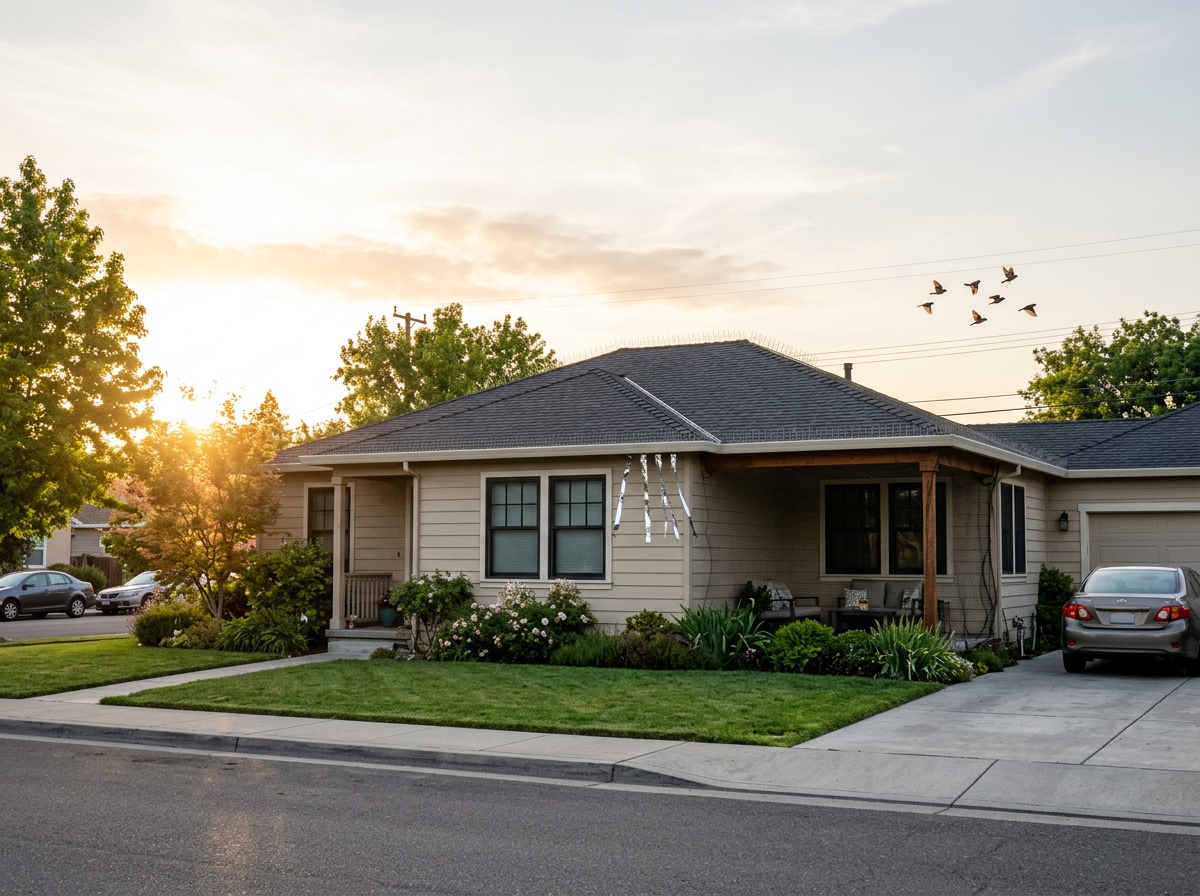
The best bird deterrent in Australia depends on two things: which bird you are dealing with and where it is causing the problem. There is no single product that works everywhere. But once you know those two things, the right solution becomes pretty obvious best bird deterrent uk. This guide walks you through exactly that, from identifying your bird pest to picking, installing, and maintaining the right deterrent for your specific spot.
Best Bird Deterrent Australia: Choose What Works Fast

Marcus Weatherby
23 Mar 2026
First, figure out which birds you have and where they are settling
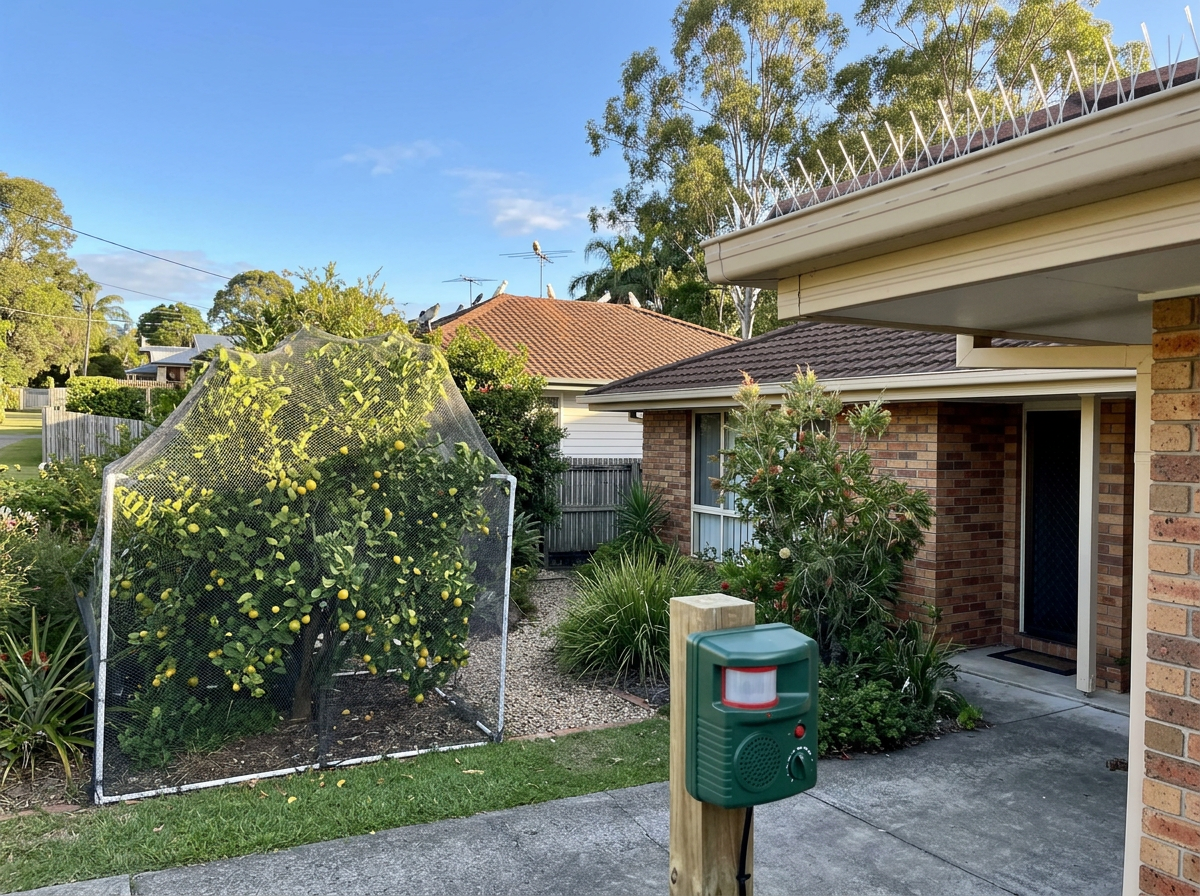
In Australia, the most common pest birds around homes and businesses are Indian (common) mynas, European starlings, pigeons (feral rock doves), corellas, cockatoos, galahs, and noisy miners. Each behaves differently and responds differently to deterrents, so getting this right saves you a lot of wasted money.
Indian mynas are arguably the biggest nuisance in urban areas. They are highly abundant on the suburban fringes of cities like Sydney, and they love roosting in roof spaces, palm trees, and pine trees. They will nest in gaps under roof tiles, in wall cavities, and in any sheltered void they can squeeze into. Starlings behave similarly and often flock together in large numbers at dusk, coating roofs and ledges. Pigeons stick to flat ledges, window sills, rooftop structures, and solar panel undersides. Cockatoos, corellas, and galahs are primarily a garden and roof problem, especially where they strip bark or damage roofing materials.
Note where you are seeing the birds at different times of day. Are they roosting overnight, resting during the day, nesting in a structure, or just passing through and foraging? Roosting and nesting birds need physical exclusion. Foraging or landing birds can often be managed with spikes, gels, or sensory deterrents. Getting that distinction right is the most important step before you buy anything, including where to buy bird deterrents that match the issue at your location.
The main deterrent types and what they actually do
There are four broad categories of bird deterrent available in Australia. Each one works for certain situations and fails in others.
Physical exclusion (netting and screens)
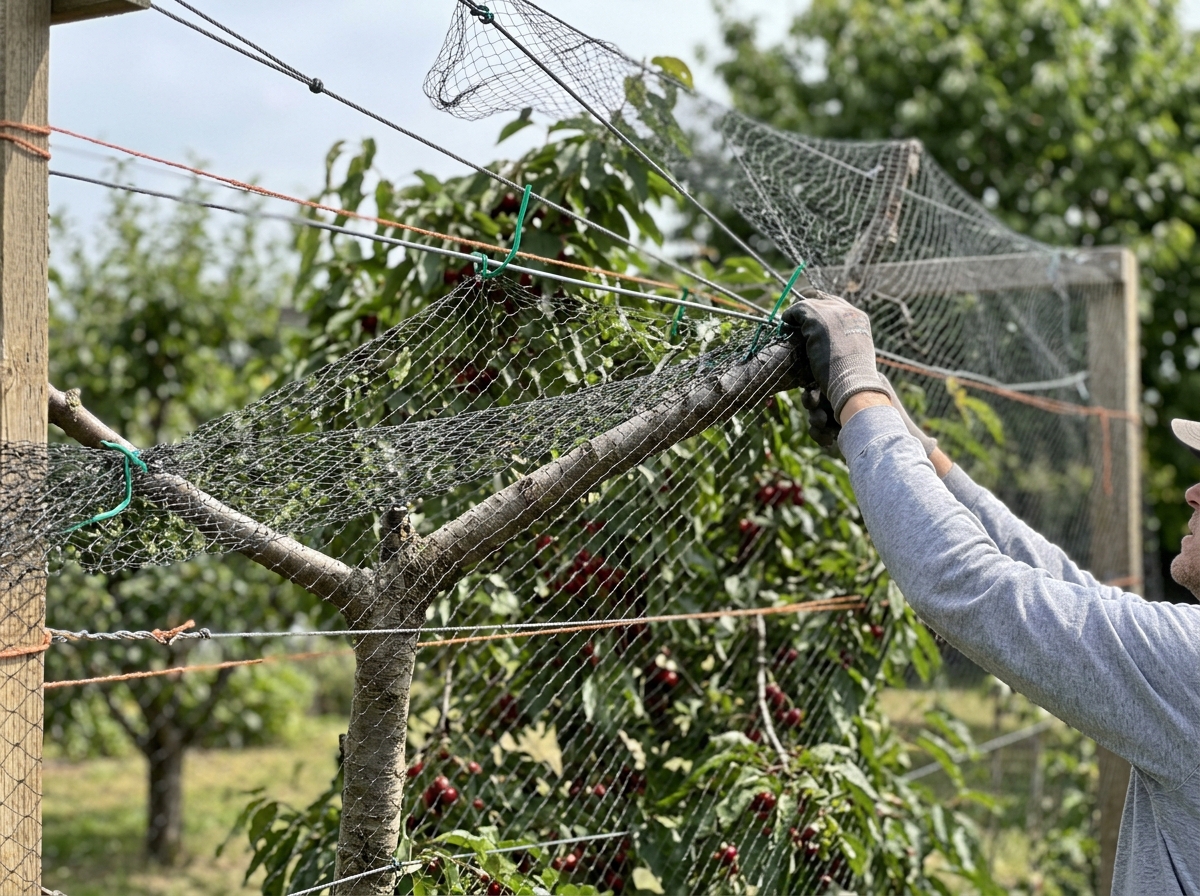
Exclusion netting is the most reliable long-term solution, especially for fruit trees, gardens, roof voids, and large structural areas. Victoria's approach to managing cockatoos, corellas, and galahs identifies exclusion netting as the only proven long-term solution for preventing bird damage to horticultural crops. The same logic applies to your garden or property. If birds cannot physically reach the area, they cannot damage it. For fruit trees in Victoria, netting mesh must be no larger than 5mm x 5mm at full stretch to comply with state wildlife safety rules, and this applies from September 2021 onward. Entanglement in non-compliant netting has caused a sharp rise in wildlife injuries, so this is not a rule to ignore.
Spikes and post-and-wire systems
Bird spikes are narrow polycarbonate or stainless steel strips with protruding wires or points that prevent birds from landing on ledges, beams, roof ridges, window sills, and gutters. They work well for pigeons and starlings and are considered humane because they do not injure birds, they simply make landing uncomfortable. Post-and-wire systems (sometimes called anti-perching wire or FliteLine-type systems) do the same job with a lower visual profile and suit longer runs on ledges or parapet walls.
Sensory deterrents (sonic, visual, motion-activated)
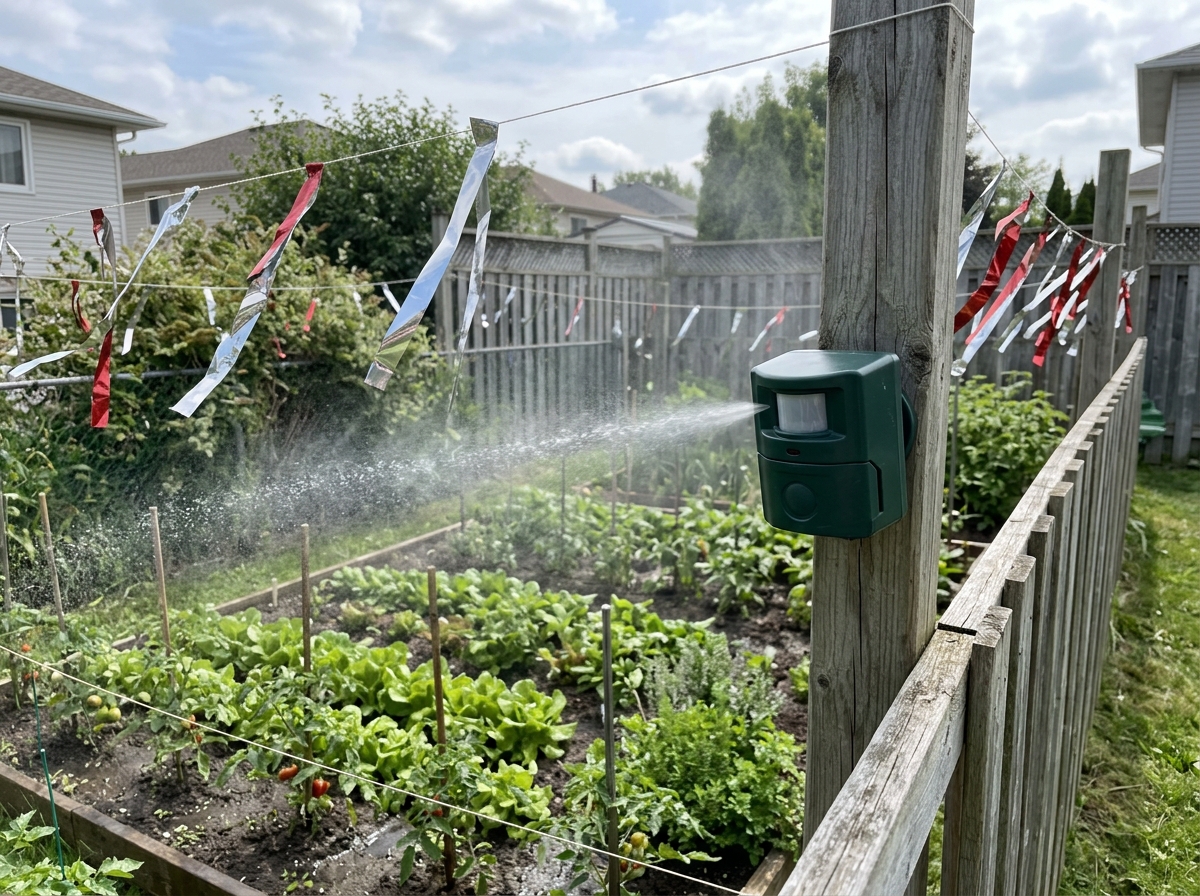
Sonic deterrents play recorded bird distress calls or predator sounds and can reduce bird pressure in gardens and open areas. They work best as a short-term measure or as part of a broader system. Visual deterrents include reflective tape, predator decoys (owl or hawk models), and spinning or moving devices. These can help in gardens and on balconies but lose effectiveness quickly as birds habituate to them, often within days to weeks. Motion-activated sprinklers are one of the more effective visual/sensory options for gardens and pools because the surprise element is harder to get used to.
A word on ultrasonic devices: the evidence does not support them as a reliable bird deterrent. Multiple independent studies, including research cited by aviation bird-control authorities, have found that commercial ultrasonic units had no measurable effect on bird activity. Birds do not hear ultrasound the way some pest mammals do, and experiments with pigeons showed ultrasound did not reduce nesting or egg-laying behaviour. Save your money on ultrasonic-only devices and invest in something with a proven track record.
Chemical repellents and gel deterrents
Optical gel (sometimes called bird gel or multi-sensory gel) is a sticky, transparent product applied in small dishes to ledges and sills. It deters birds through a combination of sight (appears as fire to birds in UV), smell (contains citronella and other scents), and touch (sticky surface). It works well on pigeons and starlings on narrow ledges and structured perching spots. It is not a netting or spike replacement for larger areas but works as a discreet alternative where aesthetics matter, such as building facades or heritage structures. Manufacturer guidance is specific: surfaces need to be thoroughly cleaned before application, and dishes must be spaced correctly depending on the bird species being targeted.
What to do right now to reduce birds immediately
If you need to reduce the problem today while you plan a longer-term solution, here is a practical fast-action sequence.
- Remove food sources immediately. Clean up fallen fruit, open compost bins, pet food left outside, and any accessible waste. This alone will reduce bird pressure within a day or two.
- Block or cover the most obvious resting spots. Hang reflective tape across ledges, railings, or garden structures. It is not a permanent fix but buys time.
- Install a motion-activated sprinkler near the garden, pool, or entry point that birds are using. These are widely available at hardware stores and work faster than static visual deterrents.
- If mynas or starlings are entering a roof void, block the entry point temporarily with a loosely fitted cloth or foam while you arrange a proper seal. Do not seal birds inside.
- Move bird baths and feeders away from the affected area. Anything attracting birds to a spot will undermine any deterrent you install.
Matching the right deterrent to each location
Different areas around a home or business call for different approaches. Here is a location-by-location breakdown.
| Location | Main Bird Problem | Best Deterrent Type | Notes |
|---|---|---|---|
| Garden / fruit trees | Cockatoos, corellas, mynas, rosellas | Exclusion netting (5mm mesh or smaller) | Only proven long-term solution for crops/trees; comply with state netting rules |
| Patio / balcony | Pigeons, mynas, starlings roosting | Spikes on railings + optical gel on ledges | Use post-and-wire for longer balcony edges where spikes look too industrial |
| Roof ridges / gutters | Pigeons, starlings, mynas | Stainless steel spikes along ridge and gutter edge | Focus on the full length; gaps will be exploited quickly |
| Roof void / under eaves | Mynas, starlings nesting | Exclusion screens and mesh over entry points | Must check for active nests before sealing; seal after breeding season or get advice |
| Windows / sills | Pigeons perching, starlings | Spikes on sill + optical gel for narrow sills | Bird gel dishes are discreet and effective on narrow window ledges |
| Pool area | Corellas, cockatoos, pigeons drinking/bathing | Motion-activated sprinkler + reflective tape initially | Netting over small pools is possible but inconvenient; sprinklers work well |
| Solar panels | Pigeons nesting underneath | Solar panel mesh (clip-on exclusion system) | Spikes cannot be fixed to panels; purpose-built mesh kits are available and preserve panel warranty |
DIY installation tips that actually make a difference
Spikes
Clean the surface thoroughly before doing anything else. Dust, bird droppings, and debris will prevent adhesive from bonding and the spikes will fail. The most common installation method is neutral-cure silicone adhesive. Apply a continuous bead, press the spike strip down firmly, and leave it to cure fully before expecting it to hold. Place spikes flush with the outer edge of the ledge so there is no gap between the spike strip and the edge where a smaller bird can still perch. Cover the full length of every surface where birds land, because any gap will be used.
Bird netting
Tension is the most important factor in netting installation. Loose netting sags, creates entry points, and can trap wildlife. For garden and fruit tree netting, run a wire rope around the perimeter and use hog rings (metal clips) to attach the net edge tightly to the wire rope all the way around, keeping the net taut and square. For roof void exclusion, use a rigid mesh or purpose-made bird-proofing wire pressed firmly against the structure and fixed at regular intervals. Check every corner and join point because gaps of even a few centimetres are enough for a myna to push through.
Optical gel
Clean the surface with an appropriate cleaner (manufacturer guidelines recommend an enzyme cleaner to remove biofilm and droppings) and allow it to dry completely. Attach gel dishes using adhesive, screws, or cable ties depending on the surface. Space dishes according to the manufacturer's specifications for your target species. Pigeons require closer dish spacing than smaller birds. Do not apply gel in areas exposed to heavy rain without a shallow overhang because gel degrades faster when repeatedly washed.
Post-and-wire systems
Post-and-wire systems like FliteLine use small posts fixed to the ledge surface with a tensioned wire running between them at a height that prevents birds from landing. Post spacing matters: follow the manufacturer's spacing specifications based on your target bird species because larger birds like pigeons require different spacing than smaller birds. Tension the wire firmly between posts. A loose wire allows birds to push it aside or land on the wire itself.
Sonic and visual devices
Place sonic units where the sound can travel across the area you want to protect, not blocked by walls or dense vegetation. Most units have a coverage radius in their specifications. Rotate or move the device every week or two to prevent birds from learning the pattern. For visual deterrents like reflective tape or predator decoys, move them regularly because static placement leads to rapid habituation. A fake owl that sits in the same spot for two weeks will be completely ignored.
When deterrents stop working and what to do about it
Birds adapt. This is one of the most common reasons people feel frustrated after buying a deterrent. Understanding why it stopped working helps you fix it quickly.
- Habituation to visual and sonic devices is the most common failure. If the deterrent does not change or move, birds learn it is not a real threat. Rotate, reposition, or combine it with another deterrent type.
- Gaps in physical barriers are exploited almost immediately. Mynas in particular will probe every edge and joint. Inspect your netting or spikes every two to four weeks and seal any new gaps immediately.
- Optical gel degrades over time, especially in high UV environments. Dishes may need cleaning or replacing every six to twelve months depending on exposure.
- Ultrasonic devices that are not producing results should be removed. The evidence consistently shows they are not effective on birds, and continuing to use them just delays you finding a solution that works.
- If birds have already nested in a cavity, the deterrent needs to go in after the nest is removed and the cavity is clean. A deterrent installed over an active nest will not stop the birds returning.
- Wrong product for the bird size is a common issue with spikes. Wide-body spike strips designed for pigeons do not stop small birds like sparrows or finches. Match the spike width to the bird.
Staying legal and humane in Australia
This is important. Most bird species in Australia are protected under state and territory wildlife legislation. In Victoria, native animals including birds are protected under the Wildlife Act 1975. In NSW, similar protections apply, and any control program is expected to use humane, target-specific methods. The key practical points are these.
- You cannot trap, harm, or kill native birds without an authority or permit from the relevant state authority, such as an Authority to Control Wildlife in Victoria. Indian mynas and European starlings are not native and have fewer protections, but you should confirm current rules for your state before taking any control action beyond deterrence.
- Netting must comply with state rules. In Victoria, garden and fruit tree netting must have a maximum mesh size of 5mm x 5mm at full stretch. Using larger mesh risks wildlife entanglement and is illegal.
- Never seal a roof void or cavity without first confirming no birds (or other animals) are inside. Doing so can trap and kill animals, which creates a legal and hygiene problem.
- Noisy miners, despite being called a pest by many homeowners, are a native species and are protected. You cannot trap or remove them without a permit.
- Exclusion and deterrence are the safest and most legally straightforward approaches for homeowners. Stick to these methods before exploring anything more interventionist.
- If you are dealing with a species requiring authorisation to control, contact your state environment department before proceeding. Acting without proper authority can result in fines.
Keeping deterrents working over time and knowing when to call a pro
A practical maintenance schedule
| Deterrent Type | Check Frequency | What to Look For | Action if Needed |
|---|---|---|---|
| Bird spikes | Every 4 to 6 weeks | Loose strips, gaps, debris accumulation, bird droppings blocking coverage | Re-adhere loose strips, clear debris, fill gaps with additional strips |
| Exclusion netting | Every 2 to 4 weeks | Holes, sagging, gaps at edges or joins, entangled wildlife | Repair holes immediately, re-tension sagging sections, free any trapped wildlife and contact a wildlife carer |
| Optical gel dishes | Every 3 to 6 months | Dried-out or dirty gel, dishes knocked loose, insufficient dish coverage | Clean dishes with enzyme cleaner, replace degraded gel, reattach loose dishes |
| Post-and-wire systems | Every 3 to 6 months | Loose or corroded wire, posts shifting, gaps in coverage | Re-tension wire, replace corroded components, check all fixings |
| Sonic/visual devices | Every 1 to 2 weeks | Birds ignoring device, static positioning, power issues (batteries/solar) | Move to new position, check power source, combine with a second deterrent type |
| Solar panel mesh | Every 6 months | Gaps at clips or corners, debris build-up, signs of bird access underneath | Re-clip loose sections, clear debris, seal any new entry points |
When it is time to get a professional in
DIY deterrents handle the majority of residential bird problems effectively if installed correctly. But there are situations where a professional bird controller is the right call.
- You have a large colony of birds roosting in a roof, wall cavity, or commercial structure where DIY access is not feasible or safe.
- Birds have been nesting in a cavity for a season or more and there is hygiene contamination (droppings, mites, odour) that needs professional remediation before sealing.
- You are dealing with a protected native species and need advice on whether and how to proceed legally.
- Deterrents have been installed correctly and maintained consistently for six or more weeks and the problem has not improved.
- The area involved is large, complex, or at height, where DIY netting or spike installation creates a fall risk or structural risk.
- You are managing a commercial property with health, safety, or compliance obligations that require documented pest management.
A licensed pest manager who specialises in bird control can carry out a site assessment, identify pressure points you may have missed, install commercial-grade exclusion systems, and provide documentation if required for compliance. For aviation-adjacent or high-risk commercial environments, specialist wildlife management is always the right first call rather than a DIY approach.
Your recommended next steps based on your situation
If you are dealing with pigeons or starlings on ledges, window sills, or roof ridges, start with stainless steel spikes or optical gel. Clean the surface, install correctly, and cover every landing spot without gaps. That will solve the problem in most cases.
If you have mynas or starlings nesting in your roof, the job is exclusion. Inspect the roof for entry points, check for active nests first, and then seal with appropriate mesh or purpose-built exclusion screens after the birds have left. If you are unsure about what is inside the cavity, get a professional to check before you seal.
If your garden or fruit trees are under constant attack from cockatoos, corellas, or other birds, invest in compliant exclusion netting. It is the only approach with consistent long-term results. Get netting with 5mm mesh or smaller to stay within legal requirements and protect other wildlife.
For pools and patios where birds are landing and fouling the area, a motion-activated sprinkler combined with spikes on railings is the most practical combination. Add reflective deterrents if you want an extra layer, but move them regularly.
For solar panels, skip spikes and go straight to a purpose-built solar panel mesh kit that clips around the panel frame. These protect the panel from damage and seal the underside gap completely without voiding your panel warranty.
Measure whether your deterrent is working by tracking bird numbers at the problem site over a two to four week period. If activity has reduced by more than half and your deterrent is installed without gaps, you are on the right track. If birds are still using the same spot after four weeks of correct installation and maintenance, revisit the placement, check for gaps, or consider adding a second deterrent type. Persistence pays off, but only when the fundamentals of installation are right.
FAQ
Are bird deterrents legal to install in every Australian state and territory?
Most deterrent approaches are allowed, but the details depend on your species and location, especially during nesting season. If you are excluding birds from roof voids or using products that could injure animals (for example, improperly installed spikes or non-compliant netting), check your state wildlife rules first or ask a licensed bird controller for confirmation.
What’s the biggest reason the best bird deterrent Australia recommendations still fail?
Almost always it is a “gap” or “landing path” issue. Even a few centimeters between a spike strip and the ledge edge, slack netting, or a cable tie placed too loosely can give birds a workable perch or entry point.
Can I mix deterrent types, like spikes plus gel or netting plus reflective tape?
Yes, layering often works, especially while you transition to a longer-term fix. A common approach is exclusion first on roofs or fruit areas, then adding spikes or gel only to problem landing spots to speed relief. Avoid relying on visual items alone if birds are nesting or roosting.
How long does it take to see results with bird spikes, gel, or sprinklers?
You usually see changes quickly with spikes and gel, but fully stopping the pattern can take one to four weeks. With sensors like motion-activated sprinklers, expect the first improvements within days, then adjust coverage if birds start using alternate landing points.
What surfaces should I not use optical gel on?
Avoid gel in areas that get heavy, direct wash-off from rain without any shelter, because repeated rain quickly degrades it. Also don’t apply it over uncleaned biofilm or droppings, since poor bonding leads to early sloughing and birds return once the gel becomes patchy.
Do I need to remove old deterrents before installing a new one?
Often yes, especially for adhesive-based systems. Residue from old gel or loose spike remnants can prevent proper cleaning, make silicone bonding less reliable, and create micro-gaps where birds perch. Remove failing products, clean thoroughly, then install the new deterrent after the surface is fully dry.
How do I know whether I should use exclusion netting versus spikes or gel?
Use exclusion when birds are roosting or nesting in a structure or damaging crops, meaning the birds must physically reach an area to cause harm. Choose spikes or gel when the issue is landing on ledges or small perching points. If birds are actually entering roof cavities, netting and sealing entry points are the priority.
Are ultrasonic bird devices worth buying in Australia?
For bird deterrence, ultrasonic-only products are not a dependable choice, even if marketing claims suggest otherwise. If you are considering one, treat it as an add-on at best, and plan around proven options like spikes, exclusion netting, gels, or motion-activated sprinklers.
Can I put netting over fruit trees and still keep other wildlife safe?
Yes, but you must use compliant mesh sizing and keep it taut. Loose or oversized mesh can create entanglement risks and also opens entry points for birds. Make sure the netting is secured all the way around the perimeter and check corners, joins, and branch contact points regularly.
What should I do if I’m unsure what’s inside a roof cavity before sealing it?
Do not seal blindly if you suspect active birds or other wildlife. Arrange a professional inspection or a targeted site assessment so you can confirm what’s using the cavity, then install exclusion screens or mesh after the animals have left, following humane and legal procedures.
How can I measure whether the deterrent is actually working?
Track bird activity at the same time windows for a consistent two to four week period, such as morning for roosting birds and dusk for flocking birds. If numbers drop by more than half and the birds are not using the same landing path, you are on track. If activity continues at the same spots after a month, look first for gaps, edge contact issues, or a new alternative perch.
Do I need to keep moving visual deterrents like reflective tape and predator decoys?
Yes. Static placement usually leads to habituation within days to weeks. Rotate locations or adjust angles so birds do not learn a predictable pattern, and only use these as extra layers when landing pressure is intermittent or as a short-term bridge to stronger exclusion.
Next Article
Best Bird Deterrent Reddit: What Works by Location
Best bird deterrent Reddit advice by location: spikes, nets, sensory, and safe chemicals with setup and troubleshooting