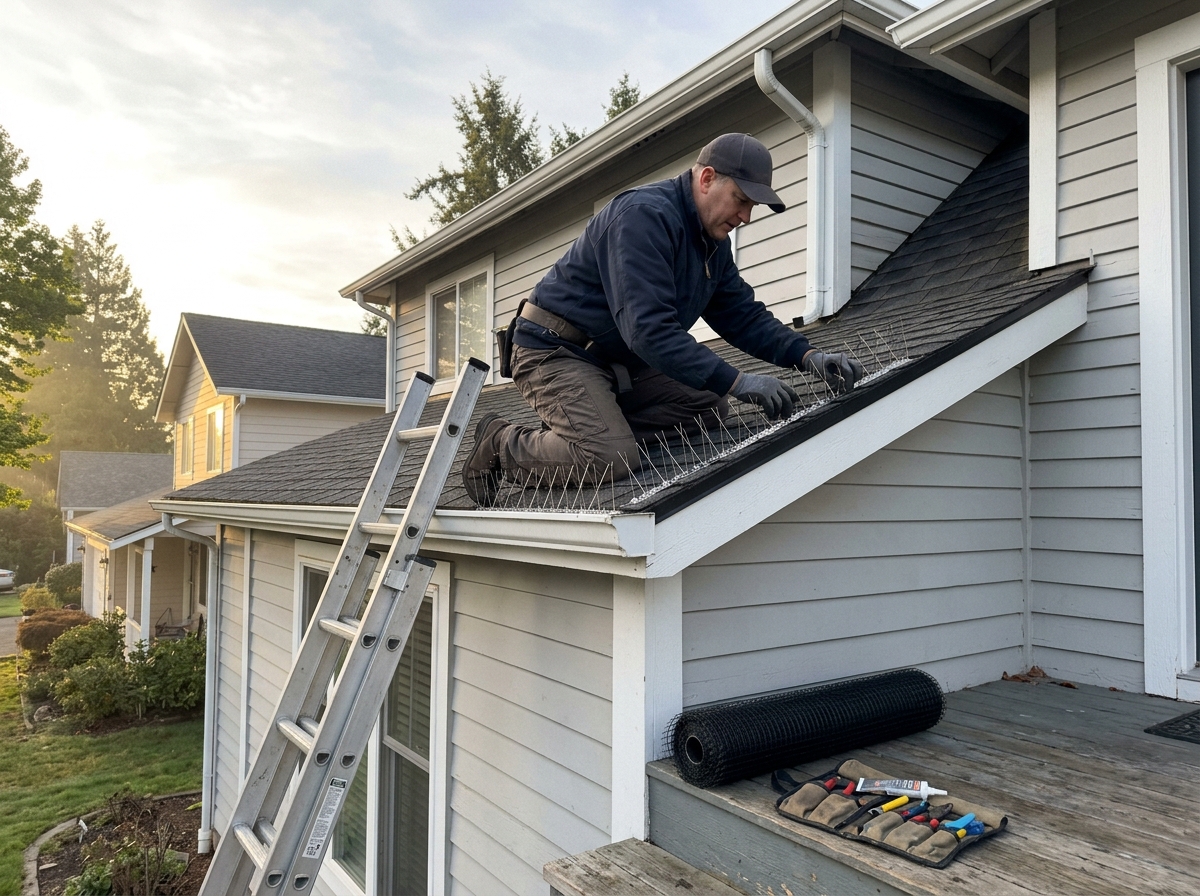
The best bird nest repellent for your situation depends on three things: the species you're dealing with, where they're trying to nest, and whether they've already started building. Get those three answers right, and choosing a repellent becomes a lot more straightforward. Skip that step, and you'll likely waste money on something that doesn't match the problem.
Best Bird Nest Repellent: How to Choose and Apply It

Marcus Weatherby
23 Mar 2026
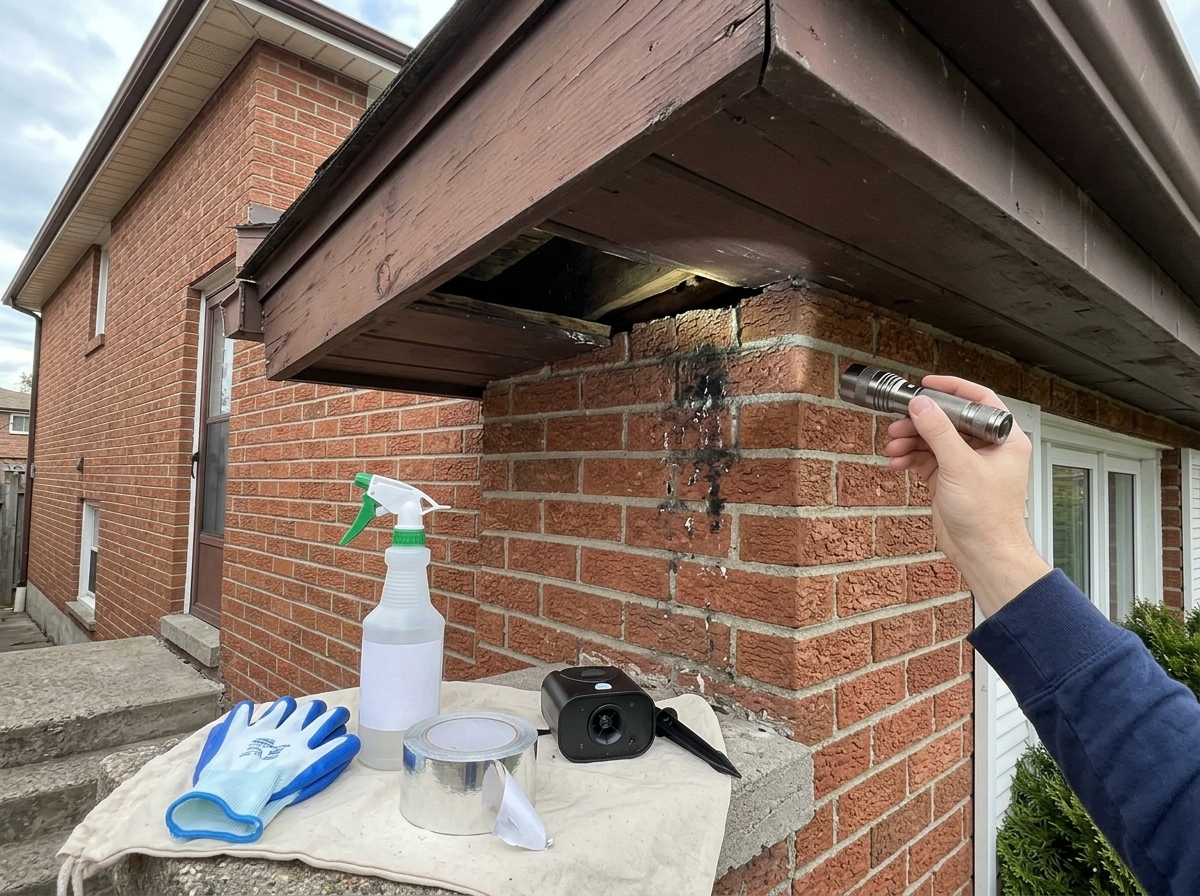
First, figure out what you're actually dealing with
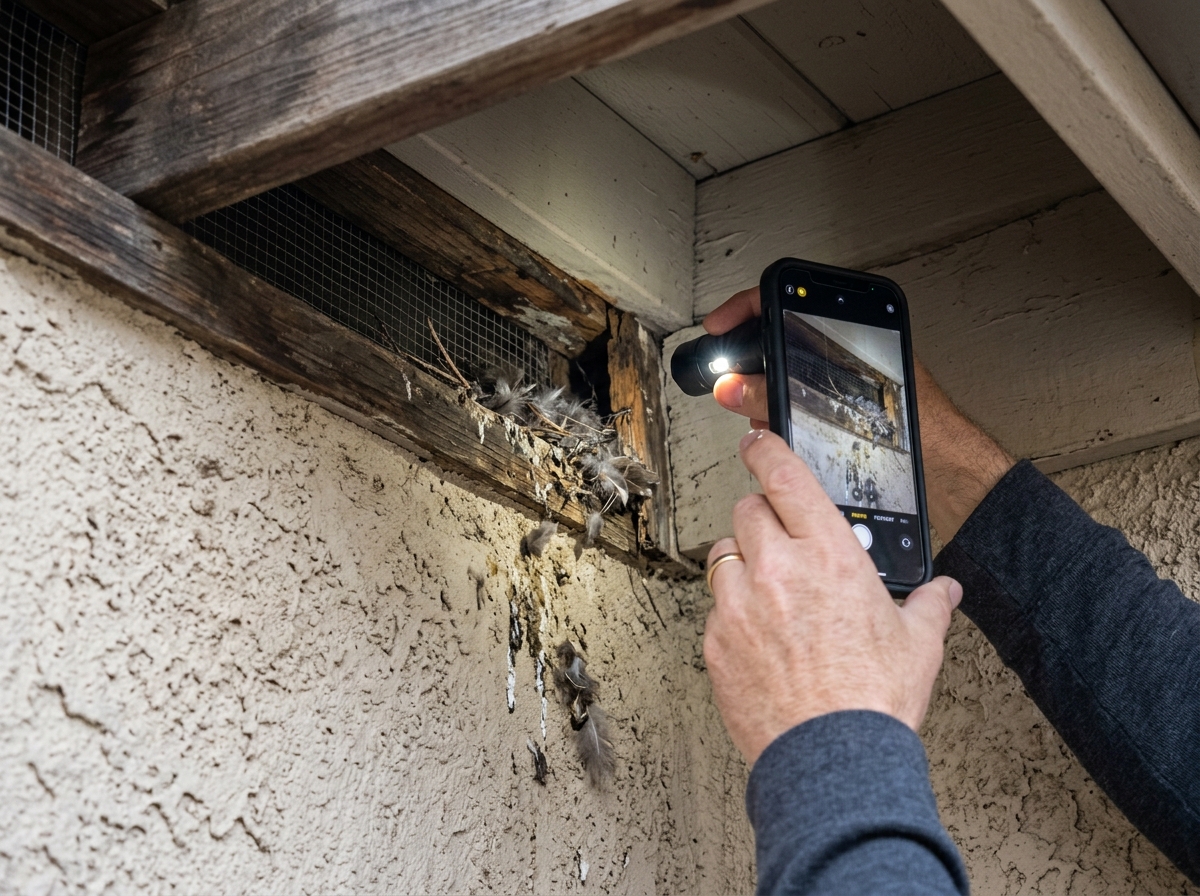
Before you buy anything, spend five minutes identifying the species and the exact nesting spot. This matters more than most guides let on. House sparrows, for example, start building nests as early as February in some parts of the country and prefer enclosed niches like dryer vents, fan vents, gaps in eaves, and holes in building facades. European starlings go for cavities too, including holes in siding, open soffits, and gaps around rooflines. Pigeons tend to use flat, sheltered ledges. Swallows target open eaves and beams. Each of these birds responds differently to different repellent types.
The nesting stage also changes everything. There are three stages that matter for this decision: pre-nesting (birds are scouting but haven't started building), active construction (nest is being built but no eggs yet), and active nest with eggs or chicks. That third stage is where legal restrictions kick in, and you have very limited options without a permit.
Check the spot carefully before you do anything. If you see a half-built nest with no eggs, you're in a window where acting fast with repellents plus physical exclusion gives you the best outcome. If there are eggs or young birds, stop, read the legal section below, and don't disturb anything until you understand your options.
Repellent types compared: chemical/odor, visual, and sonic/ultrasonic
There are three main repellent categories used for nest deterrence, and they work through completely different mechanisms. Knowing what each one actually does helps you avoid buying something that sounds good but won't work for your specific spot.
Chemical and odor-based repellents
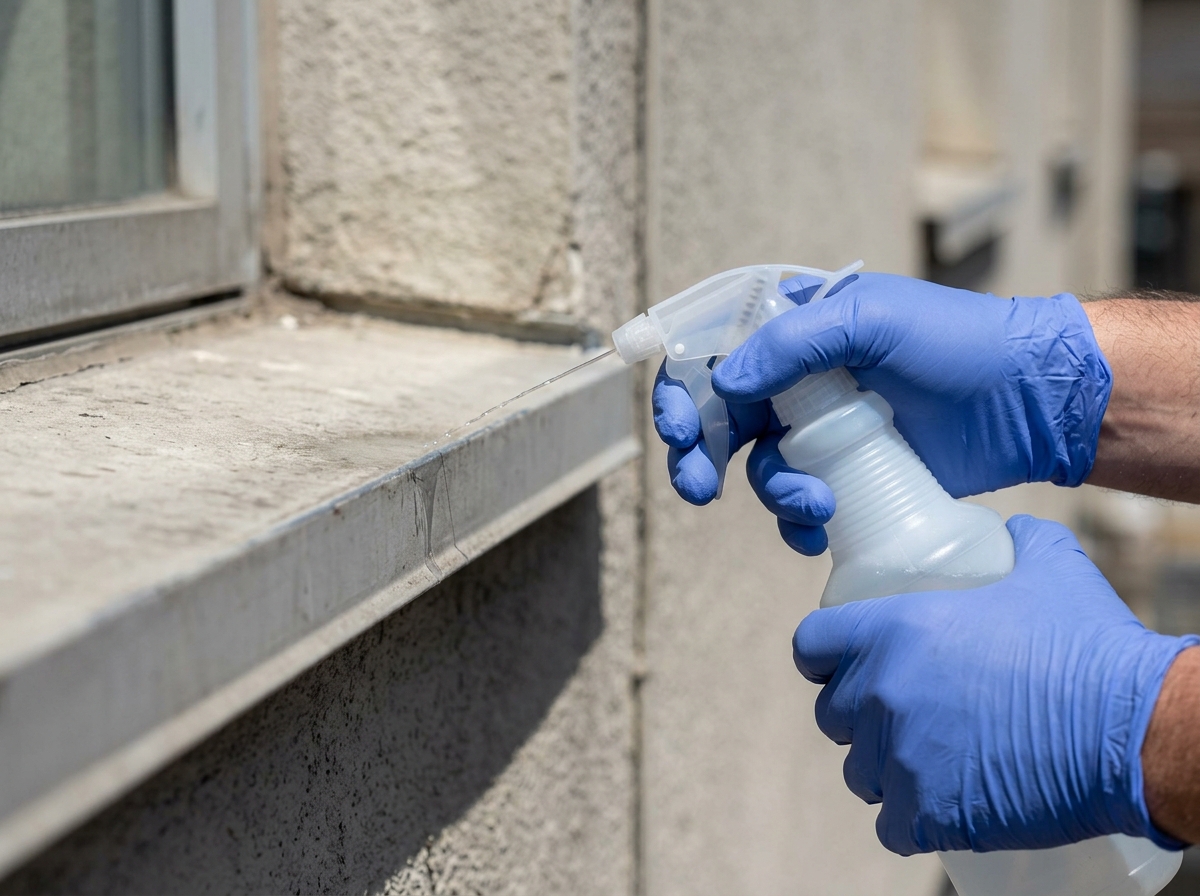
The most widely used active ingredient in liquid bird repellents is methyl anthranilate, a grape-derived compound that irritates birds through their trigeminal nerve system (essentially their sense of taste and smell combined). Products like Bird Stop, Avian Control, and AviClear all use this ingredient. Birds find it deeply unpleasant on contact, which is why it works well in areas where birds land, forage, or roost before nesting. Capsaicin-based gels and sprays (think hot pepper-derived products like PiGNX) work similarly, creating a physical irritant on surfaces that discourages perching and landing.
These are most effective when applied before nesting begins or during early scouting behavior. They won't physically block a bird from entering a vent or cavity, but they can make a spot unappealing enough that the bird moves on. Reapplication is essential since rain and UV exposure break them down quickly.
Visual deterrents
Reflective tape, predator decoys, holographic discs, and owl statues fall into this category. They work by triggering a startle or threat response. The problem is habituation: birds are smart and learn quickly that a motionless plastic owl isn't a real threat. Visual deterrents work best as part of a layered strategy, not as a standalone fix. They're most useful in open areas like gardens, patios, and flat rooftops where birds have clear sightlines. In enclosed spots like eaves or vents, visual deterrents are essentially useless since the bird can't see them from inside the cavity.
Sonic and ultrasonic devices
Sonic devices broadcast predator calls and distress signals at audible frequencies. Ultrasonic devices operate above the range of human hearing. Sonic devices can be genuinely effective in open outdoor areas, but they need to be rotated or varied to prevent habituation (birds stop responding when the sounds don't actually lead to harm). Ultrasonic-only devices are more questionable for birds specifically, since birds' hearing is largely concentrated in the same frequency ranges as humans. The effective range on most ultrasonic units drops off fast, with limited impact beyond about 30 to 50 feet. Some newer combination units pair ultrasound with LED flashes and variable frequencies specifically to slow down habituation, but their effectiveness still depends heavily on placement and the species involved.
| Repellent Type | Best Use Case | Biggest Limitation | Reapplication / Maintenance |
|---|---|---|---|
| Methyl anthranilate spray | Open surfaces, ledges, gardens, patios before nesting | Breaks down with rain/UV; ineffective inside enclosed cavities | Every 5 to 10 days during active bird pressure |
| Capsaicin gel/spray | Perching surfaces, beams, ledges | Can stain; degrades outdoors; not for enclosed cavities | Every 2 to 3 weeks or after heavy rain |
| Visual deterrents | Open areas with clear sightlines (gardens, flat roofs) | High habituation risk; useless in enclosed spaces | Rotate or reposition every 1 to 2 weeks |
| Sonic devices | Large open areas, eaves on open structures | Habituation without variation; noise may bother neighbors | Reprogram or vary calls regularly |
| Ultrasonic devices | Limited; best paired with other methods | Uncertain efficacy for birds; short effective range | Monitor and reposition as needed |
How to choose the right repellent for your location and bird behavior
The location of the nesting spot is the biggest filter. Run through these questions in order and you'll land on the best bird repellent spray category quickly.
- Is the spot enclosed or open? Enclosed cavities (vents, soffits, gaps in siding) need physical exclusion first, then a repellent spray applied around the entrance. Chemical sprays alone won't stop a bird from flying into a hole.
- Is the bird a protected migratory species or an unprotected invasive species? House sparrows and European starlings are not protected under the Migratory Bird Treaty Act, giving you more flexibility. Most other common nesting birds (swallows, robins, finches, etc.) are fully protected.
- How much weather exposure does the spot get? High-rain or high-UV areas burn through methyl anthranilate sprays faster, shortening your effective window and increasing reapplication frequency.
- Are pets or children regularly in the area? Methyl anthranilate is generally considered low-toxicity, but capsaicin products can irritate skin and eyes. Always check the label for people and pet safety warnings before applying.
- Is this a recurring seasonal problem or a one-time event? Seasonal problems (birds returning every spring) call for a layered, preventive strategy starting in late January or February, before scouts arrive.
For patios and decks: a combination of methyl anthranilate spray on surfaces and a rotating visual deterrent works well. For eaves and soffits: spray the entrance area and immediately follow up with physical exclusion (mesh, hardware cloth, or foam backer rod to close gaps) once birds move on. For rooftops and ledges: methyl anthranilate or capsaicin gel on landing zones, combined with bird spikes or netting for persistent problem areas. For gardens: visual deterrents plus a broadcast sonic device work better here than chemical sprays, which can affect plants and are impractical to apply across large areas.
How to apply repellents today: placement, coverage, timing, and reapplication
Timing is the single most important factor in repellent success. Apply at the first sign of scouting behavior, before any nesting material appears. Once birds have invested effort in a site, they're much harder to deter. House sparrows start nest construction as early as February in warmer climates, so if you've had problems in previous years, treat your vulnerable spots in late January.
Surface prep
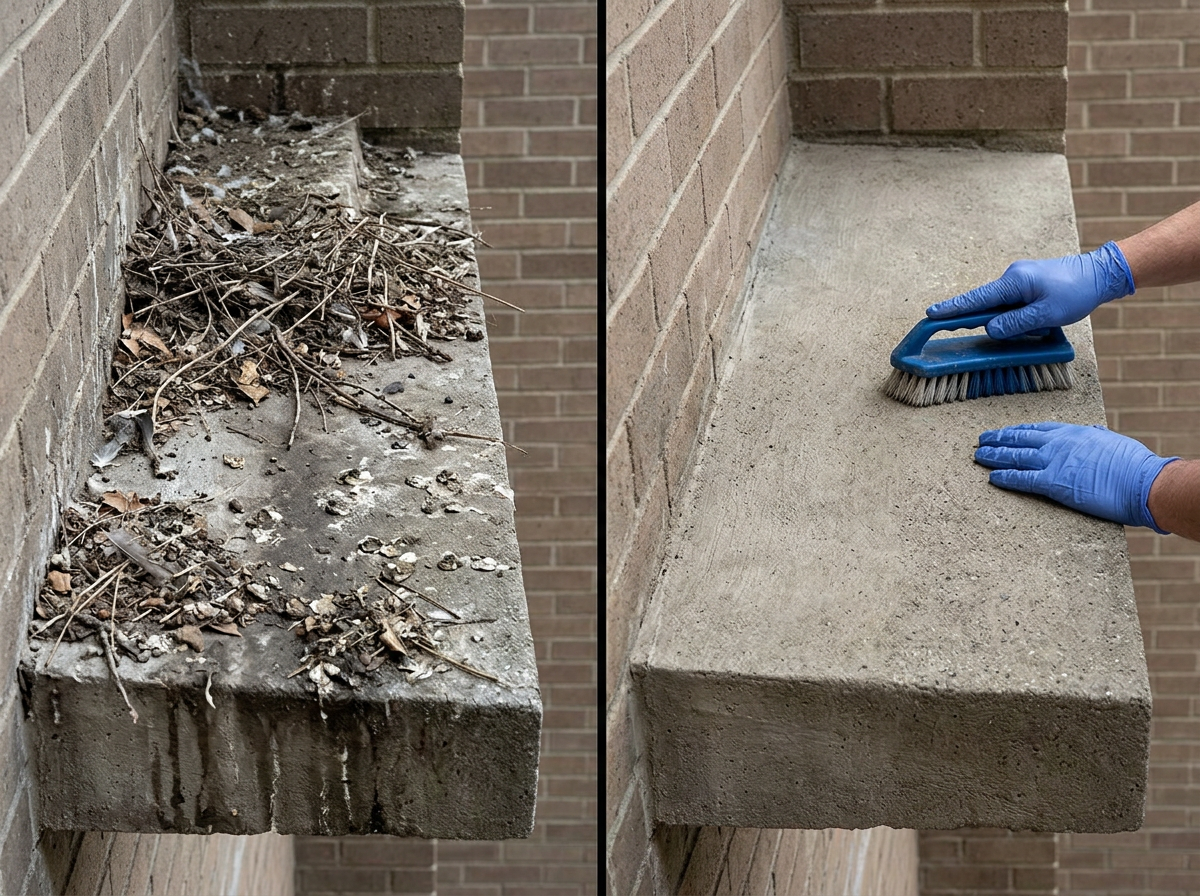
Clean the surface before applying any spray or gel. Remove old nesting material, droppings, and debris. This matters for two reasons: old nesting material actually attracts birds back to the same spot, and dirty surfaces reduce adhesion of gel products and break down sprays faster.
Placement and coverage
For spray repellents like methyl anthranilate products, apply to the specific surfaces birds land on before entering or nesting, not just the surrounding area. Spray until the surface is visibly wet. For gel repellents, apply in thin strips along perching edges, about 4 to 6 inches apart for smaller birds, wider for larger species. Don't glob it on: a thin, even application covers more area and lasts longer.
For sonic or ultrasonic devices, position the speaker facing the primary approach direction of the birds, not pointing at the nesting surface itself. Mount at or slightly above the height birds are using. Cover the area fully, keeping in mind the 15 to 30 foot effective radius for most ultrasonic units.
Reapplication schedule

Methyl anthranilate products break down with exposure and weather. Most product guidelines and field trials point to a reapplication window of every 5 to 10 days during high bird pressure. In heavy rain conditions, reapply sooner. Capsaicin-based products generally last a bit longer, with reapplication windows of 2 to 3 weeks under normal outdoor conditions. Always check the specific product label since active ingredient concentration and carrier formula affect how long a product holds up.
Keep applying consistently until bird pressure drops. Population-level behavioral change from repellents typically takes a few days to a few weeks, so don't give up after one application if birds are still scouting the area.
What if nests are already active? The legal and humane rules
This is where a lot of people accidentally cross a legal line. Under the Migratory Bird Treaty Act, it is unlawful to take, possess, pursue, capture, or disturb migratory birds, their nests, or their eggs without a federal permit. That covers almost every native bird species in the U.S. The MBTA is federal law, and violations carry real penalties.
The two main exceptions in practice are house sparrows and European starlings, which are non-native invasive species and are not protected under the MBTA. If you have an active sparrow or starling nest with no eggs, you can remove the nest and immediately apply repellent and exclusion at the same time. If eggs are present even in unprotected species, the humane choice is to wait until the nest is vacated before removing it and sealing the entry point.
For protected species with active nests, your legal options are essentially wait it out or apply for a depredation permit through the U.S. Fish and Wildlife Service. The permit pathway exists but takes time. In most residential situations, the practical answer is to wait until the nest is naturally abandoned (usually 4 to 6 weeks), then immediately apply repellent and close off the entry point before next season.
Whatever you do, don't apply chemical repellents directly to or around an active nest with eggs or chicks. Beyond the legal issue, you risk harming the birds, which creates liability and doesn't solve your long-term problem anyway.
Common reasons repellents fail (and how to fix them fast)
Most repellent failures come down to a handful of predictable problems. If your results aren't working, check these first.
- Applied too late: Birds that have already started nesting are highly motivated and much harder to displace with repellent alone. If nest construction has begun, you need physical exclusion immediately, not just repellent.
- Wrong coverage area: Spraying around the problem spot rather than on the exact surfaces birds contact. Birds need to actually encounter the repellent for it to work.
- Habituation: Birds learn that a repellent or scare device isn't actually dangerous. Rotate visual deterrents, vary sonic patterns, and combine methods to slow this down.
- Weather breakdown: A methyl anthranilate application washed out by rain the next day isn't doing anything. Reapply after rain events and track your schedule.
- Enclosed spaces treated as open ones: Spraying the outside of a vent hole doesn't stop a bird from flying in. You need physical exclusion for cavities, with repellent as a secondary measure at the entrance.
- Single method only: One repellent type rarely works as well as two or three methods layered together. Combine chemical repellent with a physical barrier or a sonic device for much better results.
- No follow-through: Applying once and waiting. High bird pressure requires consistent, scheduled reapplication until the birds genuinely redirect.
What to look for when buying: a quick checklist
When you're reading a repellent label or product page, here's what actually matters for nest deterrence specifically.
- Active ingredient: Look for methyl anthranilate or capsaicin as the primary active. These have the most field data behind them for bird deterrence.
- Application site compatibility: Confirm the product is labeled for your surface type (wood, masonry, metal, painted surfaces). Some gels stain or degrade certain materials.
- Weather tolerance: Check whether the formula is rain-resistant or requires reapplication after precipitation. Outdoor-specific formulas hold up better.
- Reapplication interval: A product that needs reapplication every 5 days is a bigger time and cost commitment than one that lasts 10 days. Factor this into total cost.
- People and pet safety: The label should list safety precautions for humans and domestic animals in the treated area. Low-toxicity doesn't mean zero caution.
- EPA registration: In the U.S., bird repellent products should carry an EPA registration number on the label. This confirms the product has been reviewed for safety and efficacy claims.
- Target species: Some products are optimized for specific bird species or behaviors. If your label lists your target species, that's a good sign the formulation was tested for your situation.
DIY action plan vs when to call a professional
Most residential nesting problems are DIY-solvable if you catch them early, the species isn't protected (or isn't actively nesting yet), and the location is accessible and limited in scale. Here's a straightforward action plan you can start today.
- Identify the species and nesting stage before touching anything.
- If the nest is active with eggs and the bird is a protected species, stop and wait. Mark your calendar to return in 4 to 6 weeks.
- If no active nest or if the bird is an unprotected invasive species with no eggs, remove any nesting material and clean the surface thoroughly.
- Apply methyl anthranilate spray to all landing and entry surfaces around the problem area. For enclosed cavities, apply at the entrance and immediately install physical exclusion (hardware cloth, vent covers, or foam backer rod).
- Add a secondary deterrent: a visual deterrent for open areas, a sonic device for larger zones.
- Set a reapplication reminder for 5 to 7 days out and check the area daily for returning birds.
- Continue until you have had at least two to three weeks of no scouting activity at the site.
When a professional makes more sense
Some situations genuinely call for a licensed bird control installer. If you're dealing with a large commercial building, a rooftop with multiple nesting sites, a facility near an airport where bird activity creates safety risks, or a situation involving protected species where depredation permits may be needed, a professional will save you time, money, and legal exposure. Professionals also have access to commercial-grade netting, track-based spike systems, and fogging equipment for methyl anthranilate applications that cover large areas much more efficiently than hand sprayers.
What to expect from a professional assessment: they should identify species, map nesting sites, recommend a layered exclusion and repellent strategy, and provide a maintenance schedule. A one-time spray without a follow-up plan is a red flag. The best bird control outcomes come from combining repellent application with physical exclusion, and a qualified installer will incorporate both. If your problem is limited to one or two spots on a residential property and you've caught it before eggs are laid, do it yourself. If it's bigger, recurring, or legally complicated, bring in a pro.
FAQ
How can I tell whether birds are scouting or already nesting with eggs and chicks?
Look for nesting material in progress. Pre-nesting usually shows repeated landings, carrying behavior, or pecking at a cavity, but no yarn, twigs, or insulation arranged. Active construction often shows the material being placed or wedged into the entrance. If you can see eggs, downy chicks, or the bird is strongly guarding with frequent incubation, treat it as a protected active nest even if you cannot confirm species.
Can I use one “best bird nest repellent” product on any bird and any location?
Usually no. The best bird nest repellent depends on species and the site type, because some birds will ignore surface-only deterrents if they can enter cavities unseen. For example, chemicals are more useful on landing and roost surfaces, while visual deterrents often fail in enclosed eaves or vents where the bird cannot see the device from inside.
What’s the correct order of operations, repellent first or exclusion first?
In most residential cases, do exclusion after you have a clear window where birds have moved on or when you remove an unprotected, unoccupied nest. Applying exclusion immediately on an active protected nest can trap birds and create serious legal risk. A practical approach is: treat for scouting first, wait for activity to drop, then seal and exclude to prevent reentry.
Should I clean the area before applying repellents if the birds just started showing up?
Yes, but do it carefully. Remove old nesting material and visible debris so the surface does not look “ready-made” for the next attempt, and so gels adhere properly. If birds are actively using the site, cleaning can count as disturbing, so pause and confirm whether eggs or chicks are present before touching the nesting area.
How do I know whether my repellent failure is due to wrong placement or wrong timing?
If you applied repellent only to the surrounding wall but not the specific landing or perching surface, birds may still enter. If you applied after nests were already built, even correctly placed repellents often do not reverse the investment. A quick diagnostic is to check whether birds continue landing on the same exact spot, that indicates placement needs to target the approach surface and not just nearby areas.
How often should I reapply methyl anthranilate or capsaicin repellents?
Plan on frequent refresh during heavy bird pressure. For methyl anthranilate products, reapplication is typically every 5 to 10 days depending on label directions and weather, sooner after heavy rain. For capsaicin gels and sprays, many setups last longer, often 2 to 3 weeks outdoors under normal conditions, but you should still follow the specific label for concentration and carrier.
Are ultrasonic devices actually effective for birds that nest in eaves or vents?
They are less reliable for cavity nesting than for open-area activity, because ultrasonic range drops off quickly and enclosed spaces reduce the signal’s impact. Even for open areas, you typically need rotation or variation to reduce habituation. If your birds are entering from vents or soffit gaps, pairing deterrence with physical exclusion usually performs better than sound alone.
Do reflective tape, owl statues, or holographic discs stop birds permanently?
Often they reduce activity temporarily, but habituation is common. Since these are visual and birds learn there is no real threat, they work best as part of a layered plan that includes chemicals or exclusion. Also, they tend to underperform in enclosed niches like dryer vents and building cavities where the birds cannot see the device from inside.
Can I trap birds or block entrances immediately if I’m sure it’s a house sparrow or starling?
You still need to be careful with timing. If there are eggs present, even with sparrows or starlings, you should confirm the situation before removing anything. For the common scenario where a nest is present without eggs, you can often remove it and then apply repellent and exclusion right away, but do it quickly and thoroughly to stop immediate re-nesting.
What’s the safest way to handle nests on ledges or in small openings if I suspect they’re protected?
Do not apply chemicals to an active nest and do not disturb it to relocate the birds. In protected-species situations, the practical path is usually waiting for natural abandonment, then sealing entry points immediately afterward. If the problem is causing serious damage or safety risk, consider starting the depredation permit process through the appropriate federal channel instead of trying DIY removal.
How long should I wait to decide the repellent is working?
Give it time if you started during scouting or early construction. Behavioral changes often take a few days to a few weeks, so one missed reapplication or an incorrect surface can look like “it doesn’t work.” If birds keep landing on the same approach point after proper application and refresh, it usually means the target is wrong, the timing is too late, or exclusion is still needed.
When should I switch from DIY to hiring a licensed bird control installer?
If the site is large, multi-story, or recurring across many locations, a pro can map nesting sites and install commercial exclusion systems more efficiently. Also move to a professional if there are protected-species concerns, if the building is near an airport or involves safety risks, or if you need large-area coverage where hand spraying is inconsistent. A good installer will provide a maintenance schedule, not just a one-time treatment.
Next Article
Best Black Bird Repellent: What Works by Bird Type and Site
Find the best black bird repellent by bird type and site, with what to buy, how to apply, and safety tips.